
Temperature-Sensitive Dispatch: A Warehouse Handover Checklist
A cold chain dispatch checklist covering pick checks, logger start, documents, carrier handover, data responsibility and exception escalation fields.

Purpose and scope
Dispatch is where a well-packed shipment is most likely to be damaged by ordinary delays. The box has been packed, the logger is running and the refrigerant is working against the clock. From then on the shipment depends on people finishing checks, completing documents and handing it to a carrier who accepts responsibility. This guide gives a dispatch checklist and the fields a handover record should carry. It applies to temperature-sensitive goods in general, including medicines, clinical supplies and food, and it belongs to the Applications section.
Scope note: This guide does not state temperature limits, hold times or acceptance criteria. Those come from your product documentation, shipping specification and quality or food safety function. The checklist covers who checks what and what is recorded, not what values are acceptable.
Product and shipment boundaries
Write dispatch checks for a specific shipment type. A palletized lane shipment, a parcel shipment and a courier hand-carry have different handover points. For each type, define where your responsibility starts, where it ends and what evidence shows the transition. For regulated products, distribution guidance such as EU Good Distribution Practice and USP <1079> describes expectations for responsibilities and records. For food in the United States, the sanitary transportation rule addresses roles among shippers, loaders, carriers and receivers. Both are context only. Check the current versions and your own obligations.
Dispatch checkpoints
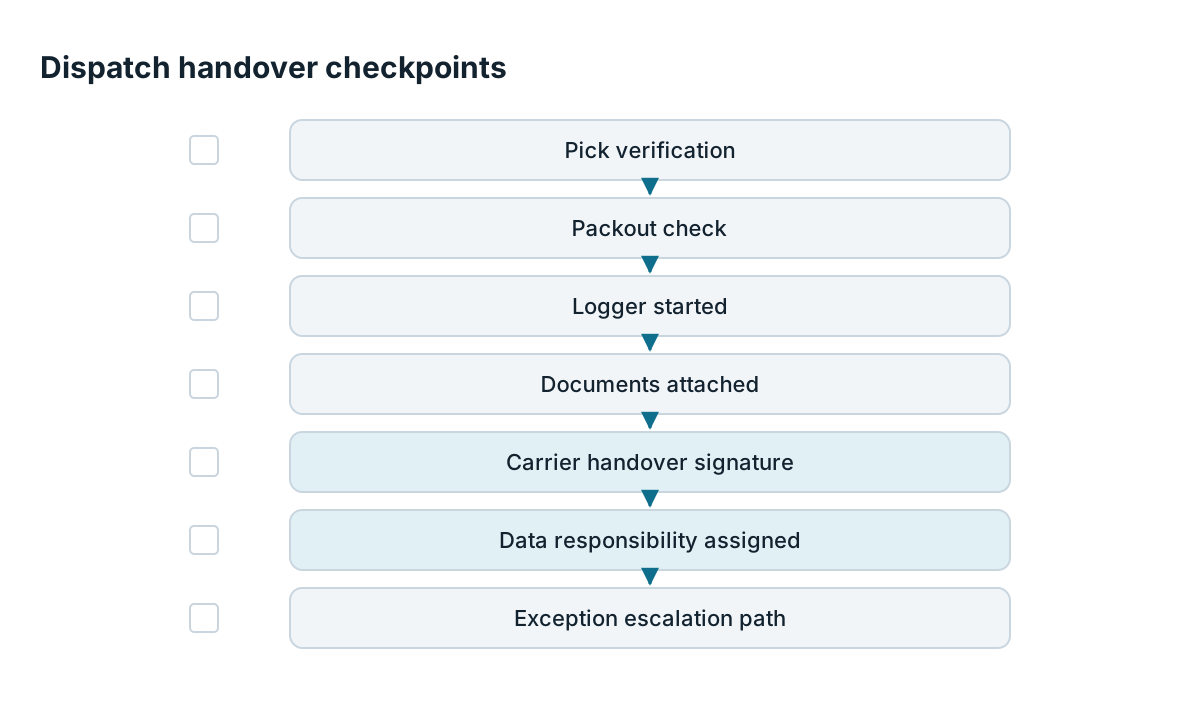
1. Pick verification
Confirm that the picked item matches the order: product, batch or lot where relevant, quantity and destination. Where barcodes are used, the scan should compare against the order, not simply read a code. Identification keys often follow GS1 conventions, so check that the codes on your goods are the ones your scanners and customers expect. A mis-pick caught at dispatch costs less than one found at the destination.
2. Packout check
Verify that the box was packed to the correct written instruction for this lane or order: the right shipper, the right refrigerant configuration, the right filler and the lid closed as specified. If a packout station recorded these items, dispatch checks that the record exists. Our article on packout station requirements explains what a station should record so dispatch does not repeat the work by hand.
3. Logger started
Confirm that a logger is in the box if one is required, that it is running, and that its identity is linked to the shipment. A running light is not enough. Check the start time and the association record. For what to specify in the logger itself, see our guide to temperature data logger selection.
4. Documents attached
Check the shipping labels, handling instructions, packing list, any dangerous goods marking and any customer or regulatory documents. Mismatched labels are a recurring dispatch fault, especially when a different product goes out the same day. Our article on cold chain labeling covers how label printing and verification can be built into the process.
5. Carrier handover signature
Record who handed over, who received, when, and at what location. The carrier signature, whether paper or electronic, should identify the carrier, vehicle or service and the time. If the carrier cannot collect on time, the dispatcher needs a rule for what happens next rather than an improvised decision.
6. Data responsibility assigned
Decide who owns the monitoring data after dispatch. For offline loggers, that is whoever retrieves and reviews the data after delivery. For real-time devices, it is whoever watches alerts during transit. Our comparison of real-time versus offline monitoring sets out the differences that affect this ownership. Put a name, a role and a contact route on the handover record.
7. Exception escalation path
State what a dispatcher does when something is wrong: a failed check, a late carrier, a logger that will not start, a damaged box. List who is called, in what order, with what authority to hold or release, and what gets written down.
Handover record fields
A handover record is only useful if people complete the same fields each time. Consider including:
| Field group | Example fields |
|---|---|
| Shipment | Shipment or order number, product description, quantity, destination |
| Packout | Packout instruction version, shipper configuration, refrigerant record reference, packed by, packout time |
| Monitoring | Logger or device identifier, start time, monitoring type, data owner and contact |
| Documents | Labels verified, packing list attached, special handling marks |
| Handover | Dispatch time, carrier name, collector name, signature, vehicle or service reference |
| Exceptions | Exception noted yes or no, description, who was informed, decision, time |
Keep required fields few and clear. A long form that is partly filled in is worse than a short one that is always complete.
Who owns what
| Responsibility | Typical owner | Typical failure |
|---|---|---|
| Pick and packout instruction | Warehouse operations | Out-of-date instruction version used |
| Packout execution | Packout operators | Shortcut taken under time pressure |
| Logger start and association | Packout or dispatch | Logger running but not linked to a shipment |
| Carrier booking and handover | Logistics or dispatch | Carrier arrives late with no agreed fallback |
| Data review after delivery | Quality, food safety or logistics, as agreed | Nobody receives the data |
| Exception decision | Quality or product owner | Dispatcher decides alone to ship anyway |
Staging and waiting
Many problems start in the time between closing the box and carrier pickup. Define the staging area, its conditions, the maximum wait the packaging configuration allows according to its qualification or specification, and what the dispatcher does when the wait approaches that limit. The limit comes from your packaging specification, not from this guide.
Illustrative example: a dispatcher is told that a closed box must go to the carrier within the time stated in its packout instruction. At pallet build, the instruction card is attached to each box and the closing time is written on it, so a late pickup is visible to anyone passing the dock. The specific time comes from your instruction, not from the example.
Training and changes to the process
A checklist works only if people use it the same way every shift. Train dispatchers on the reason behind each checkpoint, along with the order of ticks, and keep the written instruction at the point of use. When a product, shipper or carrier changes, update the checklist and the handover record together, and record the date the new version took effect. Review exceptions on a regular schedule with quality or food safety, so repeated faults lead to a process change rather than another reminder email. If a fault keeps returning at the same checkpoint, the cause is usually in the process design, for example a missing station record or an unrealistic cut-off time, and not in operator discipline.
Questions to ask carriers and warehouse providers
- What do you record at pickup, and can we receive that record?
- What happens when a pickup is missed, and who is notified?
- Where are boxes held between arrival at your site and onward movement?
- How do you handle monitoring devices or alerts during your leg?
- How do you escalate when you detect damage or an apparent temperature problem?
Dispatch checklist
- Pick verified against the order, including batch or lot where required.
- Packout confirmed against the current written instruction for the lane.
- Logger running, start time recorded and identity linked to the shipment.
- Labels, packing list and any special handling documents checked and matching.
- Closing time recorded and wait limit from the packaging instruction visible.
- Carrier identity confirmed and handover signed with time and name.
- Data owner named, with contact route recorded.
- Exception path available to the dispatcher, including out-of-hours contact.
- Any exception recorded with description, decision-maker and time.
Common failure modes
- Handover records filled in after the fact from memory.
- Logger started early or late and not recorded.
- Mixed pallets where labels for two products look alike.
- Carrier collects at an unplanned time, with no one checking elapsed time.
- Nobody assigned to receive the data after delivery.
- Dispatchers feel pressure to ship despite a failed check and have no authority or path to escalate.
Limitations of this guide
This guide is general information. It does not state temperature limits, hold times or acceptance criteria, it does not interpret any regulation and it cannot replace your quality system or your carrier agreements. Standards and regulations change, so check the current version and confirm which obligations apply to you. Cold Chain Practice has not tested or observed any facility or process described here.
Related guides
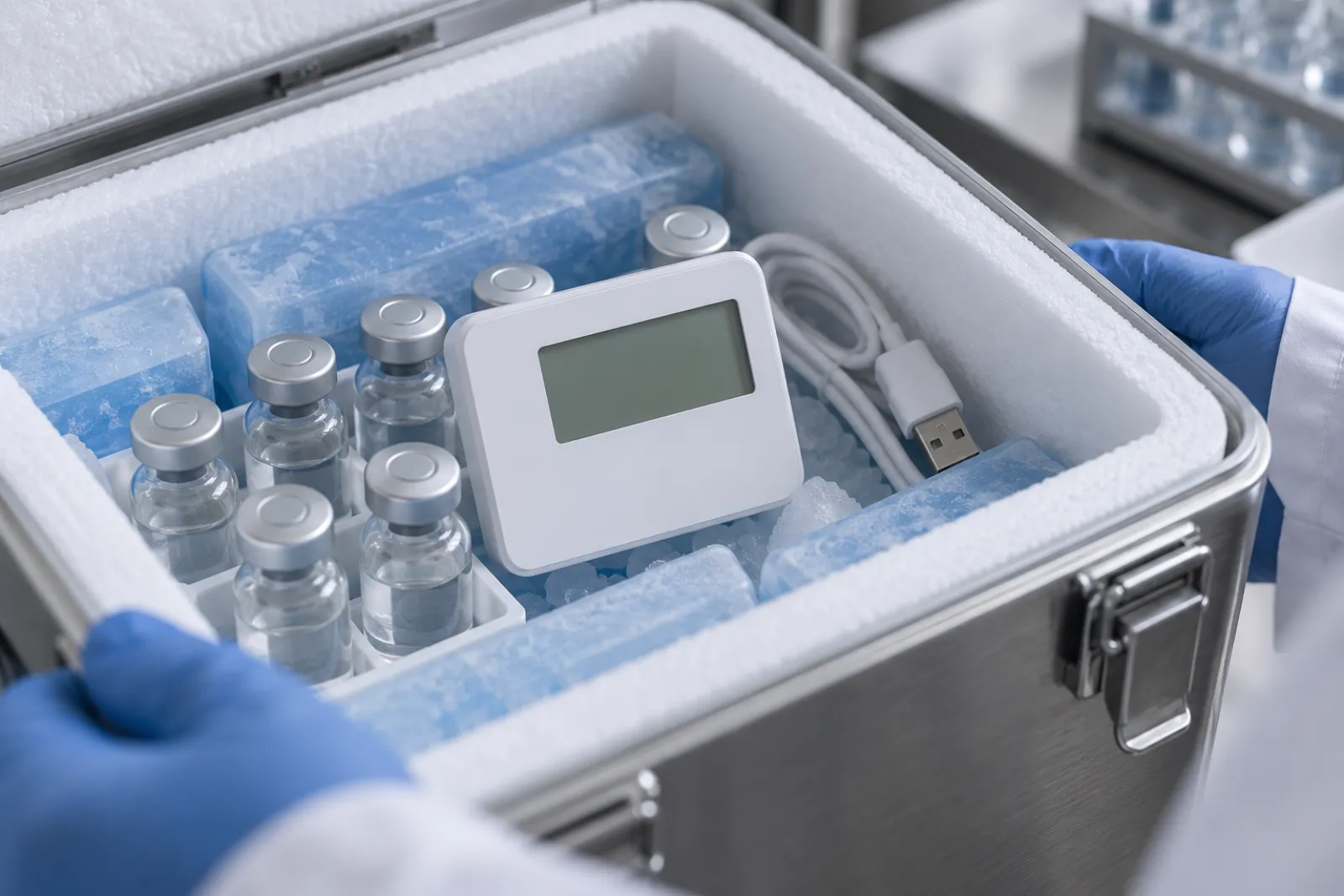
How to Specify a Cold Chain Temperature Data Logger
A specification checklist for a cold chain temperature data logger: range, accuracy, logging interval, export method and calibration documents to request.
Read guide
Real-Time Tracking or Downloadable Loggers: Which Workflow Fits?
Compare real-time and downloadable temperature monitoring by when data arrives, alarm response, network dependence and cost structure, lane by lane.
Read guide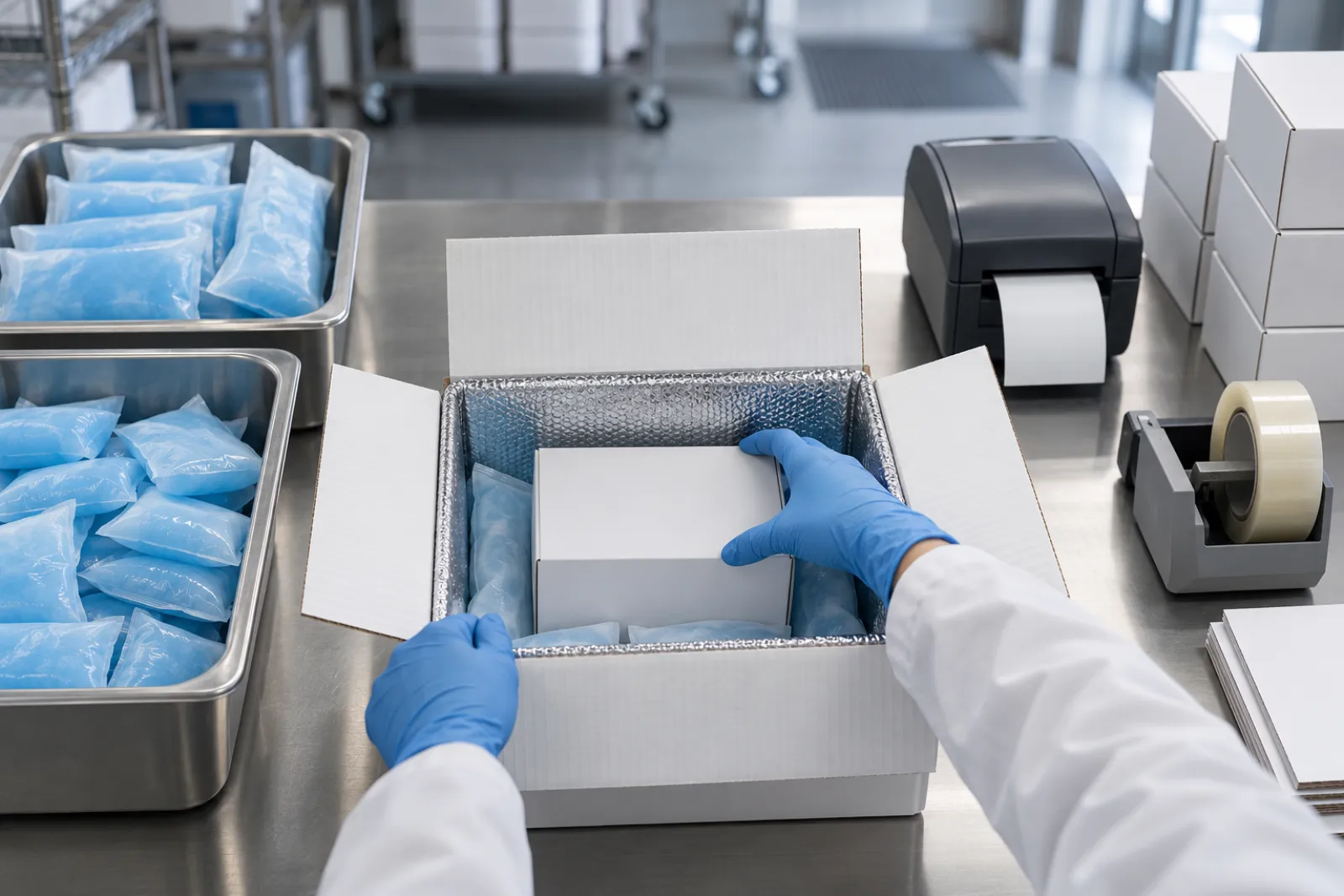
Designing a Cold Chain Packout Station: Process and Equipment Checklist
A practical checklist for designing a cold chain packout station: workstation layout, refrigerant staging, records, interfaces and what to confirm before buying.
Read guide
Labeling Refrigerated Packages: Materials, Surface Conditions and Line Integration
How to separate label-material fit from labeling-equipment fit for refrigerated packages, with surface conditions, line integration and a checklist for suppliers.
Read guide