

Pharmaceutical Shipping Packout: What Buyers Must Define Before Equipment Selection
Build packout requirements from product documentation, lane assessment and quality input before you shortlist equipment. Owners, interfaces and records.
Read guideThe same equipment is used very differently depending on what it carries. This section is organized by application: pharmaceutical products, chilled and frozen food, clinical trial supplies and warehouse dispatch. Each guide describes the product and scenario boundaries first, then the site requirements, packaging and monitoring approach, and handover responsibilities.
Food and pharmaceutical content are kept apart. Temperature conditions, quality requirements and documentation expectations differ, and one is never offered as a substitute for the other. Nothing here is a release decision for any product; conditions always come from the product documentation.

Build packout requirements from product documentation, lane assessment and quality input before you shortlist equipment. Owners, interfaces and records.
Read guideThe four application guides are not steps in one process. Each covers a different kind of shipment, so most readers need only one or two. Choose the guide that matches what you carry, then read the others for contrast. If you ship pharmaceutical products, read the pharmaceutical packout guide. If you ship chilled or frozen food, read the food packaging comparison. If you assemble supplies for studies, read planning a clinical-trial kit shipping workflow. If your concern is the last step before a carrier takes the shipment, read the warehouse dispatch handover checklist, which applies across the other three.
Pharmaceutical, clinical and food shipments have different requirements, so the guides keep them separate.
Requirements from one area should not be copied into another. A food process is not a lighter pharmaceutical process, and a clinical kit is not a small pharmaceutical shipment. In every case, the temperature conditions come from the product documentation or the study documents, and none of these guides makes a release decision.
What you carry shapes the equipment you choose. Once you know what you carry, data logger specification and the packout station design guide are much easier to write, because the owners, records and interfaces are already named. For buying, the qualification report review guide explains how to check whether a supplier’s evidence matches your own conditions.
Each guide ends with questions for suppliers and a checklist. None describes a case study or a test run by this publication.
Build packout requirements from product documentation, lane assessment and quality input before you shortlist equipment. Owners, interfaces and records.
Read guide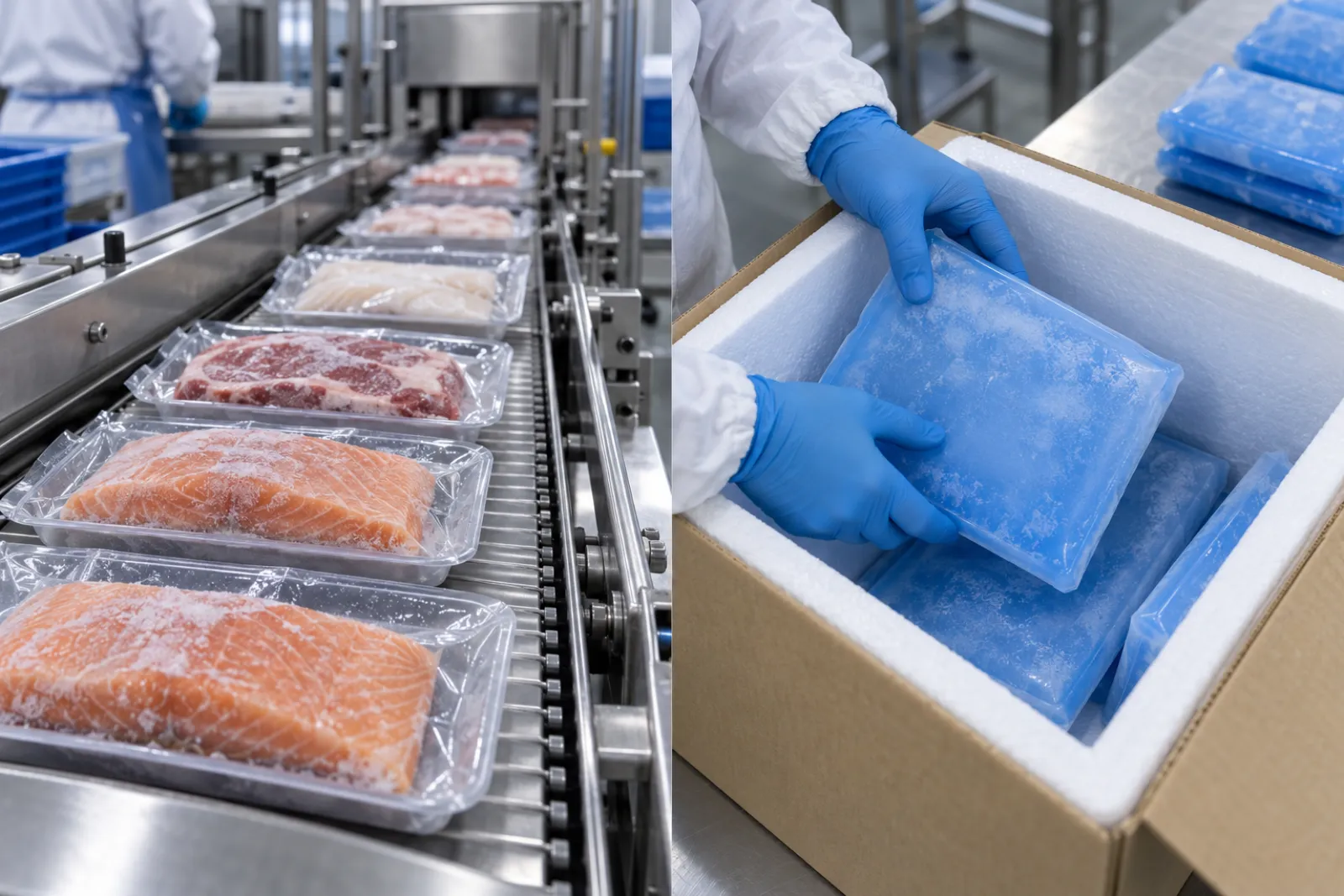
Separate primary food packaging from thermal shipping packaging, and see where the equipment boundary sits between product packing and cold chain packout.
Read guide
Map kit components, labeling, handovers and temperature evidence for clinical trial kit shipping, with clear owners and an escalation path for excursions.
Read guide
A cold chain dispatch checklist covering pick checks, logger start, documents, carrier handover, data responsibility and exception escalation fields.
Read guide