
Pharmaceutical Shipping Packout: What Buyers Must Define Before Equipment Selection
Build packout requirements from product documentation, lane assessment and quality input before you shortlist equipment. Owners, interfaces and records.

Scope: what a pharmaceutical packout is, and who decides
A pharmaceutical shipping packout is the controlled sequence that turns a product, a shipper, a refrigerant and a monitoring device into one shipment. It covers conditioning the components, loading, closing, labeling and releasing the box to a carrier. Buyers of packout equipment often start with the machine: a filling unit, a sealing station, a conveyor. That order causes trouble. The equipment should follow from a written set of requirements, and those requirements come from people other than the equipment buyer.
Scope note: This guide does not state temperature limits for any medicine, and it does not make release, usability or disposition decisions. Product temperature limits and release decisions come from product documentation and the responsible quality function. The product owner and the quality unit decide. This site describes how to organize the questions.
In this article, “the product owner” means the marketing authorization holder or sponsor or whoever holds responsibility for the product. “Quality” means the quality unit that approves procedures, qualification work and deviations. The packout buyer, whether an operations manager or a packaging engineer, supplies practical input but does not set the product’s conditions.
For the wider choice between powered and passive systems, see our comparison of active versus passive cold chain packaging. This article sits in the Applications section and deals with the step before that choice: defining what the packout has to achieve.
Start from product documentation, not from a generic range
Every pharmaceutical shipment begins with a statement of what the product needs during transport. That statement lives in product documentation: the labeling, the stability data package and the quality agreement or shipping instruction that quality has approved. It may include a storage range, a permitted time outside that range, protection from light or freezing, and handling limits such as orientation or agitation.
Do not copy a range from a supplier brochure, from another product, or from a general guide. A shipper sold as suitable for a named range is only relevant if that range matches your product documentation. If the documentation is silent on a point that affects packout, such as allowed excursion time, raise it with quality before specifying equipment. Do not fill the gap with an assumption.
Before any supplier meeting, have these in writing:
- The approved transport condition statement, with document number and version.
- Whether the product may be frozen, and whether freezing damages it. That decides whether conditioned refrigerant or direct contact with cold packs is acceptable.
- Any light, humidity or orientation requirement that affects how the unit is placed in the box.
- Whether the shipment is a finished commercial product, a bulk intermediate or a returned item, since each may follow different procedures.
Requirements by owner
Requirements fail most often at the interfaces between functions. Mapping each requirement to an owner shows the gaps early.
| Requirement | Typical owner | Input to the buyer | What the buyer asks |
|---|---|---|---|
| Transport condition statement | Product owner and quality | Approved document and version | Is it current, and does it cover transit time and excursions? |
| Lane and season assessment | Logistics with quality review | Origins, destinations, carriers, handover points, expected transit and hold times | Which lanes are in scope, and which are excluded? |
| Packaging and monitoring specification | Packaging engineering with quality | Shipper configuration, refrigerant, logger type and placement | Is the configuration qualified, and for which lanes and durations? |
| Packout procedure | Operations with quality approval | Step sequence, conditioning times, closure and labeling | Which steps need equipment support and which stay manual? |
| Equipment requirements | Buyer, engineering and quality | Throughput, space, utilities, records and cleaning needs | What must the equipment record, and who reviews it? |
| Data and deviation handling | Quality with logistics | Review responsibility, escalation path, decision authority | Who sees the data first, and who decides? |
From product documents to equipment
Work in order. The product’s transport condition statement drives the lane and route assessment. The lane assessment drives the packaging and monitoring specification. The specification drives the packout procedure, and only then do equipment requirements follow. Reverse the order and you may buy equipment that handles a refrigerant format or a shipper size your qualified configuration does not use.
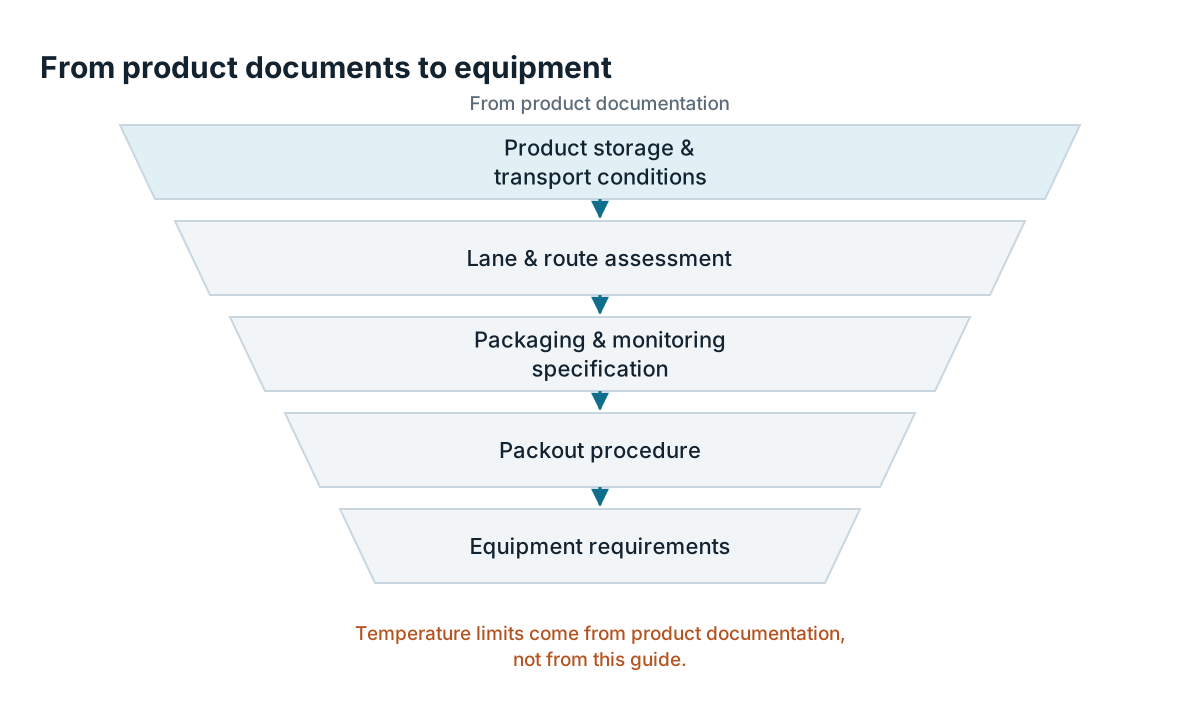
Each layer narrows the choices for the next. A qualified shipper configuration fixes which refrigerant to use, in what quantity and in what conditioning state, which in turn fixes what a gel pack or panel conditioning step must deliver. The packout procedure then states how long conditioned components may wait before loading. That wait time, written in the procedure, becomes a throughput and staging requirement for the station.
Packaging and monitoring decisions that shape the station
Several design choices made upstream decide what the equipment must do.
Shipper and refrigerant. The qualified configuration defines the box, the insulation, the refrigerant type and the loading pattern. Equipment must handle that format reliably. A station designed around one pack size may not tolerate a second configuration added later for a different lane.
Monitoring device. The logger affects the packout step: when it is started, where it is placed, how its identity is recorded, and how the shipment is linked to it. Our guide to temperature data logger selection covers what to specify. For the packout buyer, the question is whether logger start and association can be captured as part of the station, or whether they remain a separate manual step with its own record.
Labeling. Shipping labels, handling instructions and any product-specific warnings must match the product documentation and carrier requirements. If labeling happens at the station, the system needs a reliable way to stop the wrong label going on the wrong box.
Dry ice or other regulated materials. If the configuration uses regulated materials, packout instructions must follow current carrier and dangerous goods rules. Check the applicable edition of the IATA Dangerous Goods Regulations and your carrier’s requirements. Equipment and procedure must support the marking and quantity records those rules require.
Packout procedure and process interfaces
Write the procedure before you write the equipment specification. It should state the sequence, the allowed time between steps and the points where a person must verify something. Typical interfaces to define:
- Refrigerant conditioning to staging: where conditioned components wait and how their time is tracked.
- Staging to loading: who confirms that the correct components are present.
- Loading to closing: what is checked before the lid goes on, such as logger started and product count.
- Closing to labeling: how the box identity ties to the shipment record.
- Labeling to handover: how the sealed box is held until the carrier collects it.
Our article on packout station requirements describes how these interfaces turn into station layout, records and operator controls. Bring your written procedure to those discussions instead of asking suppliers to propose one.
Evidence the buyer should expect
Equipment that supports a regulated process comes with evidence that it does what the requirement says. Define the evidence you need before you issue a request, and agree with quality who reviews it.
- Qualification evidence for the shipper configuration, including the conditions and durations it was tested for. When reviewing a supplier’s report, use the questions in our guide to reviewing a qualification report.
- Equipment documentation appropriate to your quality system, such as specifications, drawings, software descriptions and calibration records for any measuring devices.
- For electronic records, how the system handles access control and audit trails, so quality can assess it against applicable rules such as 21 CFR Part 11 where relevant.
- Operating, cleaning and maintenance instructions that match the environment where the station will be placed.
Distribution frameworks such as EU Good Distribution Practice, the WHO model guidance on time- and temperature-sensitive products, and USP <1079> describe expectations for responsibility, qualification, monitoring and deviation handling. They give context for your questions and do not replace your own regulatory obligations. Check the current version of each document, and confirm with quality which ones apply to your products and markets.
Handover and exception responsibility
Define what happens when a box leaves the packout area. Write down who owns the shipment between packout and carrier pickup, who receives the temperature data after delivery, and who decides whether an excursion matters. That last decision belongs to quality and the product owner, working from product documentation. Logistics or operations should supply the data and timeline without interpreting acceptability.
For shipments for clinical studies, additional labeling and documentation obligations apply. See our guide to planning a clinical-trial kit shipping workflow for how that case differs.
Questions to ask equipment suppliers
- Which parts of the process does the equipment control, and which remain with the operator?
- What records does it generate automatically, and in what format can quality review them?
- How does it handle a change in shipper size or refrigerant format, and what revalidation does that trigger?
- What happens on a power loss or a fault mid-cycle, and how are affected units identified?
- Who provides installation and verification documentation, and what is excluded?
Typical failure modes
- Equipment specified before the transport condition statement was confirmed, leading to rework of the refrigerant format.
- A packout procedure that lets conditioned components wait longer than the qualified configuration assumed.
- Logger start and shipment association handled informally, so data cannot be tied to a box.
- No named owner for post-delivery data review, so excursions are discovered late.
- Labels applied from a generic template that does not match the current product documentation.
Pre-selection checklist
- Current transport condition statement obtained from product documentation, with version.
- Quality named as reviewer and approver of requirements.
- Lanes, seasons and expected hold times listed, with excluded lanes stated.
- Qualified shipper and refrigerant configuration identified, or a plan to qualify one.
- Logger type, start point and association method defined.
- Written packout procedure drafted with allowed wait times between steps.
- Labeling and regulated-materials requirements checked against current carrier rules.
- Evidence list agreed with quality before any supplier request is issued.
- Handover, data review and excursion decision owners named.
Limitations of this guide
This guide is general information for buyers and engineers. It does not give product temperature limits, it does not interpret any regulation for your situation, and it does not replace the judgment of your quality unit or your regulatory advisers. Standards and guidance named here change over time, so check the current version and confirm which obligations apply to your products and markets. Cold Chain Practice has not tested any equipment or configuration discussed here.
Related guides
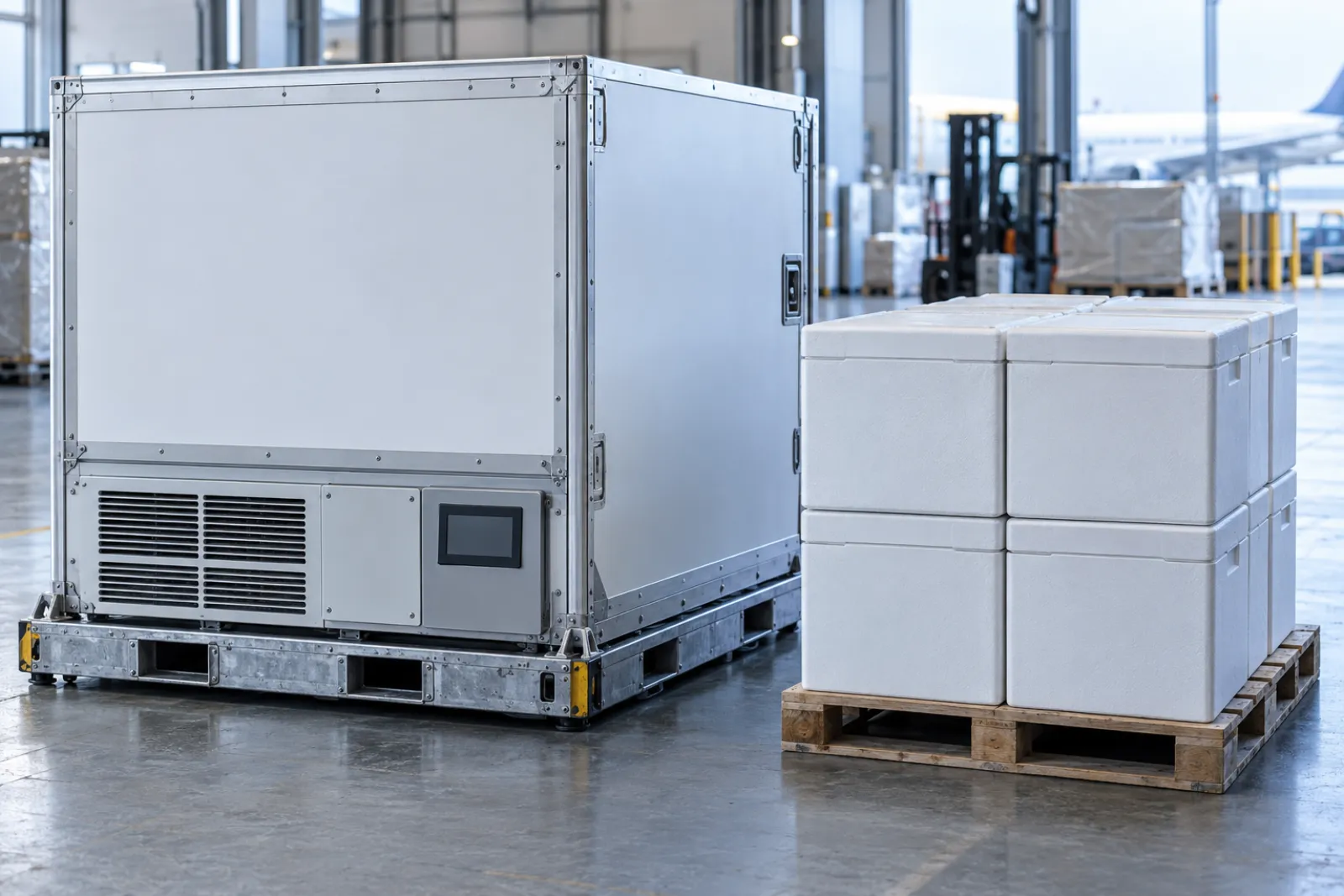
Active vs Passive Cold Chain Packaging: A Buyer's Comparison
Compare active and passive cold chain packaging by system boundary, route constraints and operating conditions, without a universal winner.
Read guide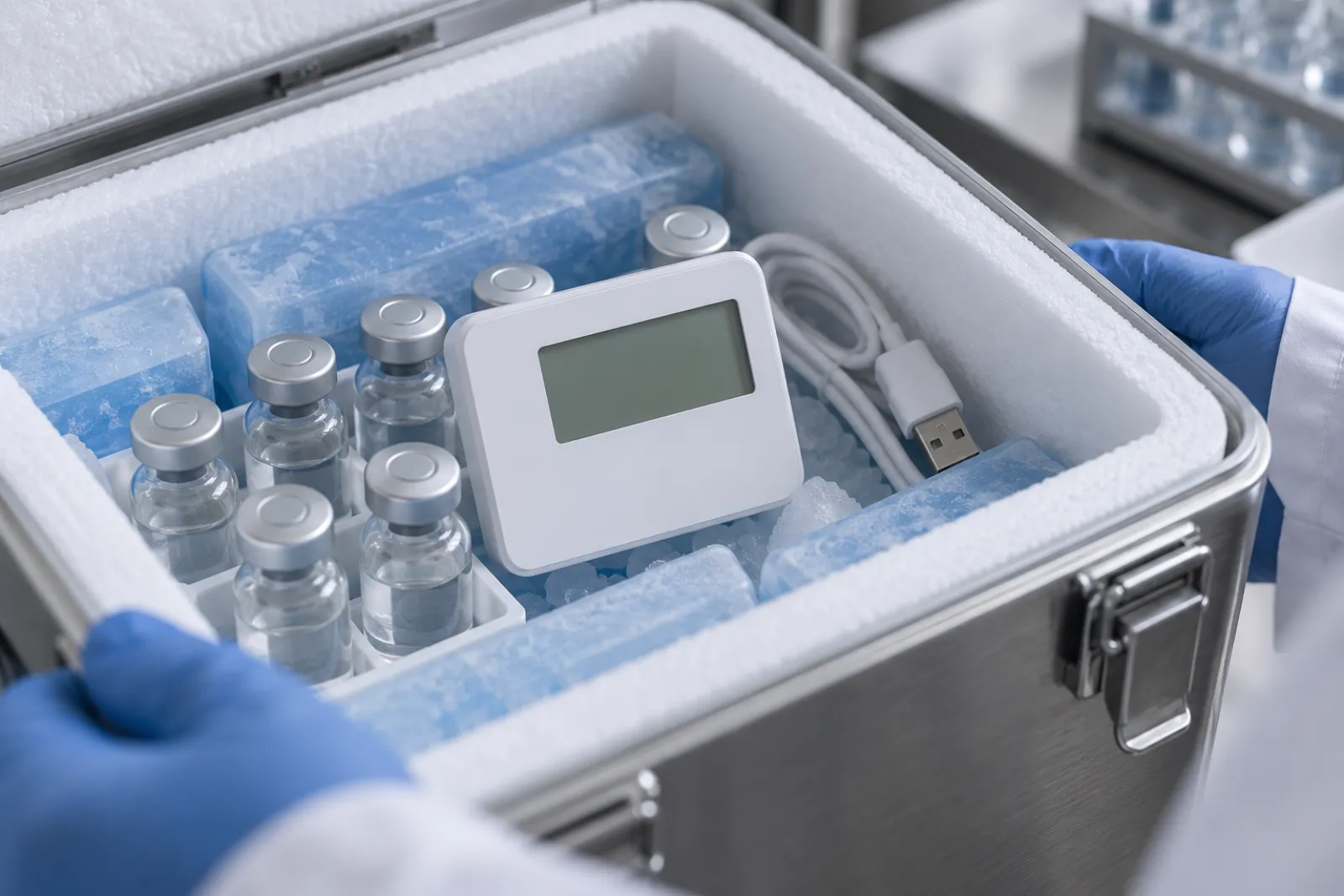
How to Specify a Cold Chain Temperature Data Logger
A specification checklist for a cold chain temperature data logger: range, accuracy, logging interval, export method and calibration documents to request.
Read guide
Designing a Cold Chain Packout Station: Process and Equipment Checklist
A practical checklist for designing a cold chain packout station: workstation layout, refrigerant staging, records, interfaces and what to confirm before buying.
Read guide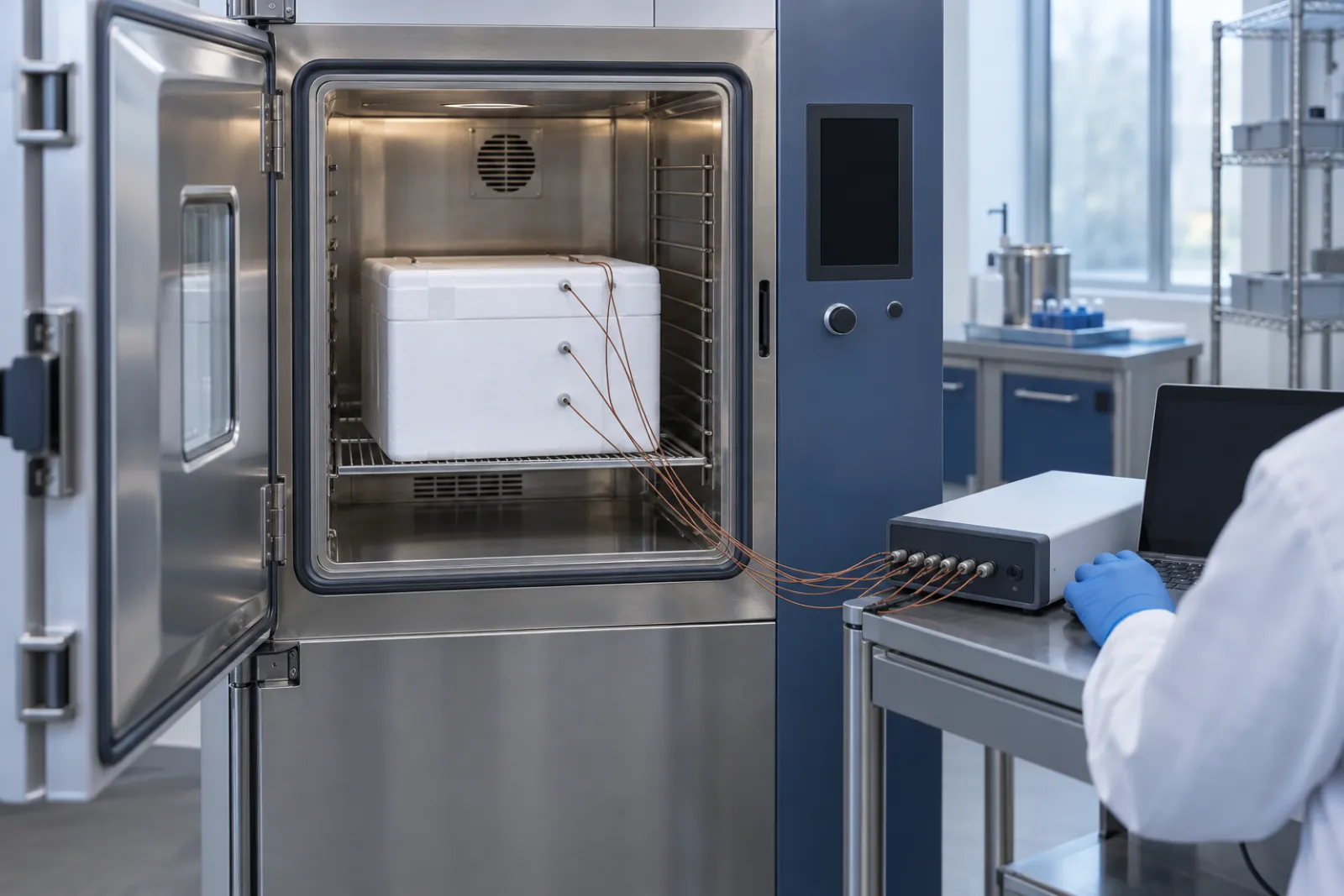
Thermal Packaging Qualification Reports: Reading Conditions and Limitations
How to read a thermal packaging qualification report: check the test object, payload, temperature profile, duration, acceptance criteria and stated limits.
Read guide