

Cold Chain Equipment Procurement: A Practical RFQ Checklist
Turn capacity, environment, interfaces, evidence, service and acceptance needs into a clear RFQ, with a copy-ready field table for packout equipment buyers.
Read guideBuying cold chain equipment means asking for the right documents and reading them carefully. This section helps a team prepare a request for quotation, understand what acceptance testing evidence should contain, review qualification reports for the conditions they describe, and compare costs on stated assumptions.
The guides provide checklists and worksheets, not price lists. Any numbers in worksheets are labeled as illustrative examples, and no supplier ranking or test result is implied. Readers remain responsible for their own requirements, quotations and qualification decisions.

Turn capacity, environment, interfaces, evidence, service and acceptance needs into a clear RFQ, with a copy-ready field table for packout equipment buyers.
Read guideThe procurement guides follow a purchase from request to evidence to cost. Begin with a practical RFQ checklist, which turns capacity, environment, interfaces, evidence, service and acceptance needs into a clear request. Next, read the FAT and SAT guide to agree on protocols, test cases and sign-off before you place an order. When suppliers send documents, the guide to reading thermal packaging qualification reports helps you check what a report covers. Finally, use the packout cost worksheet to compare options on stated assumptions rather than on a single quoted price.
The order is flexible. Many teams read the cost worksheet early to see which inputs they lack, then return to the RFQ once those are filled in.
Product temperature limits come from product documentation. These guides do not state what range any product needs.
This section depends on decisions made elsewhere. A packaging comparison such as active versus passive systems tells you what you are qualifying evidence for. Logger requirements from the data logger specification and the calibration certificate guide belong in the RFQ as documents to request. Station and line requirements from the packout station guide and the end-of-line guide supply the interfaces that most RFQs leave thin.
The guides supply checklists and field tables and imply no supplier ranking, price or test result. This publication has tested nothing. You remain responsible for your requirements, quotations and qualification decisions, and the guides help you write those decisions down and defend them.
Turn capacity, environment, interfaces, evidence, service and acceptance needs into a clear RFQ, with a copy-ready field table for packout equipment buyers.
Read guide
A buyer's checklist of FAT and SAT items to agree with the seller before purchase: protocols, test cases, deviations, sign-off and documents for packaging equipment.
Read guide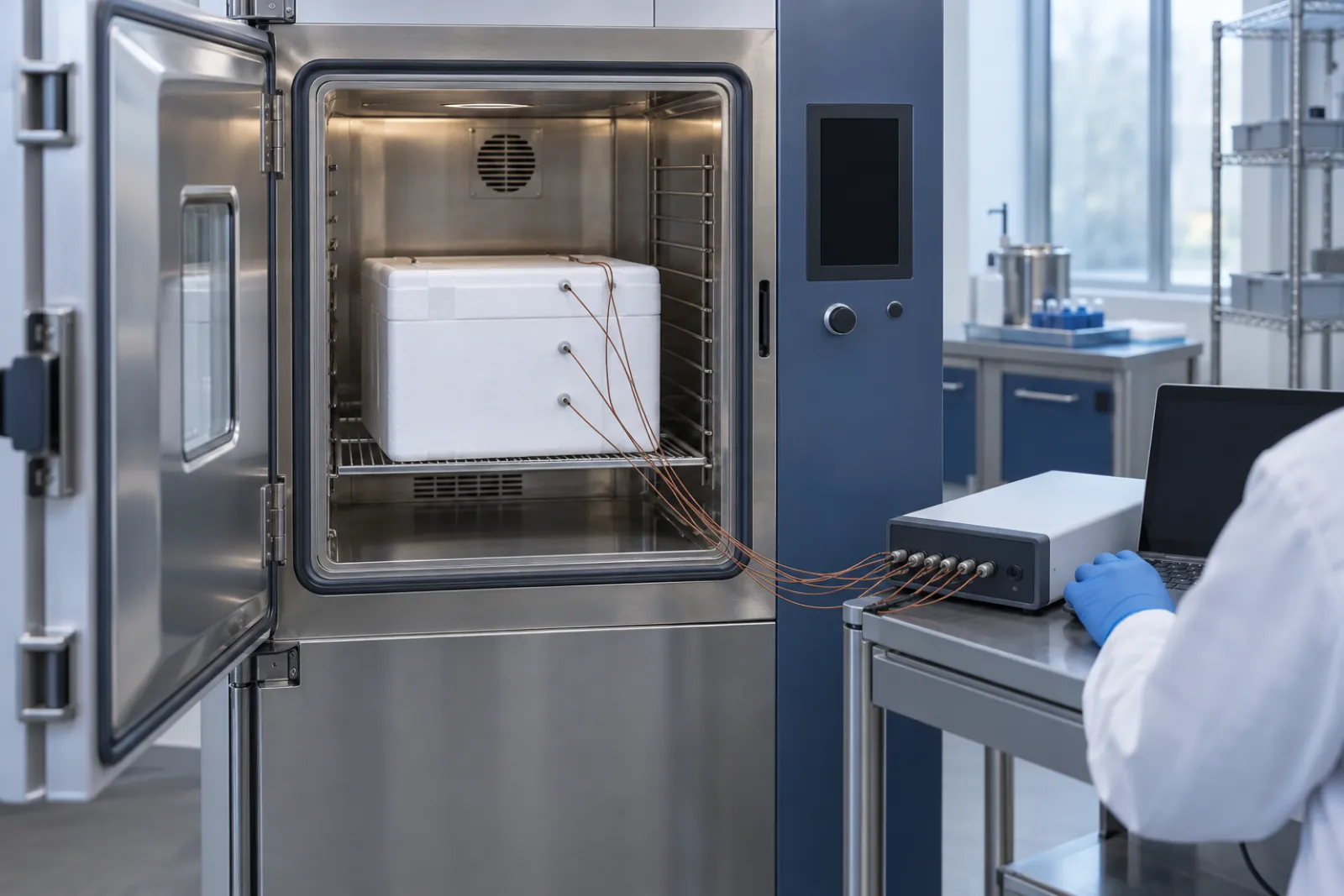
How to read a thermal packaging qualification report: check the test object, payload, temperature profile, duration, acceptance criteria and stated limits.
Read guide
A transparent cost worksheet for cold chain packout: materials, labor, monitoring, return logistics and losses, with formulas and blank cells you fill in.
Read guide