
How to Specify a Gel-Pack Filling and Sealing Process
How to define refrigerant, film, fill quantity, sealing and cleaning requirements before you ask suppliers about gel-pack filling and sealing equipment.
What process does this guide cover?
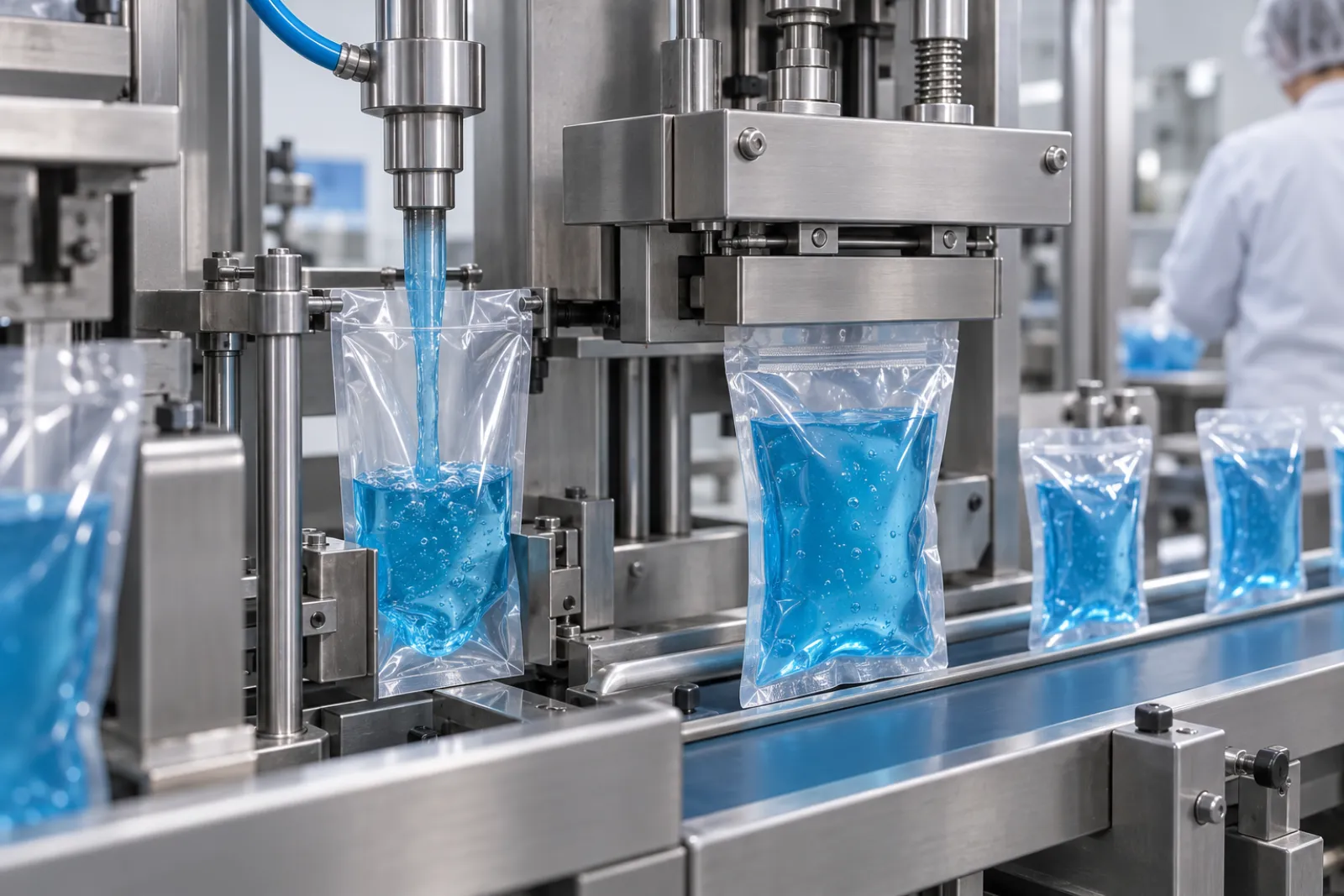
This guide covers making gel packs or phase change refrigerant packs: dosing a medium into film or pre-made bags, sealing them, checking them, and conditioning them for use. It is for buyers and engineers who need to specify that process before they talk to equipment suppliers.
Refrigerant packs are a component of every packout that uses them. If you make packs in-house or through a contract filler, the filling and sealing process sets the pack weight, the seal integrity and the leak rate. Those affect thermal performance, handling and the number of packs rejected at the packout station. The packout station guide covers where those packs are used, and the refrigerant type and quantity per pack come from your thermal design and the refrigerant selection guide.
For other automation topics, see the Automation section hub.
One point governs the rest of this page. General liquid-filling capability does not prove suitability for a specific gel or phase change material. A machine that fills water-thin liquids well may fail on a thick gel, a slurry with particles, or a medium that changes viscosity with temperature. Define the medium and the pack first, then test the equipment against them.
Define the refrigerant and filling conditions
Before you contact any supplier, write down the following.
- Medium. Water-based gel, water with additives, a salt-solution eutectic, an organic phase change material, or something else. Get the safety data sheet and the supplier’s handling guidance.
- Viscosity and behavior. Viscosity at filling temperature, whether it is shear-thinning, whether it strings or drips at the nozzle, and whether it holds particles or fibers. Ask the medium supplier for the data rather than estimating.
- Filling temperature. Some media are filled warm, some cold. Temperature changes viscosity and can affect seal quality if the medium reaches the seal area.
- Fill quantity and tolerance. Target volume or weight per pack and the allowed range, set from the thermal design. That includes the headspace the medium needs to expand on freezing.
- Film or bag. Material, thickness, layer structure, sealant layer, and whether it is roll stock or a pre-made bag. Confirm that the film is compatible with the medium over the pack’s life, with freezing, and with the sealing method you intend to use.
- Pack size range. Number of sizes and how often you change over.
- Product contact. If the pack may touch food or food packaging, check the material rules for your market. In the EU, Regulation (EC) No 1935/2004 is the framework for food-contact materials. Confirm the current requirements with your regulatory staff.
- Throughput. Required packs per shift, including peak demand, and whether packs are made to order or to stock.
If the medium or film is not settled yet, say so in the RFQ. A supplier can then propose trials rather than quote a configuration that may not suit.
Compare bag formats, dosing and sealing methods
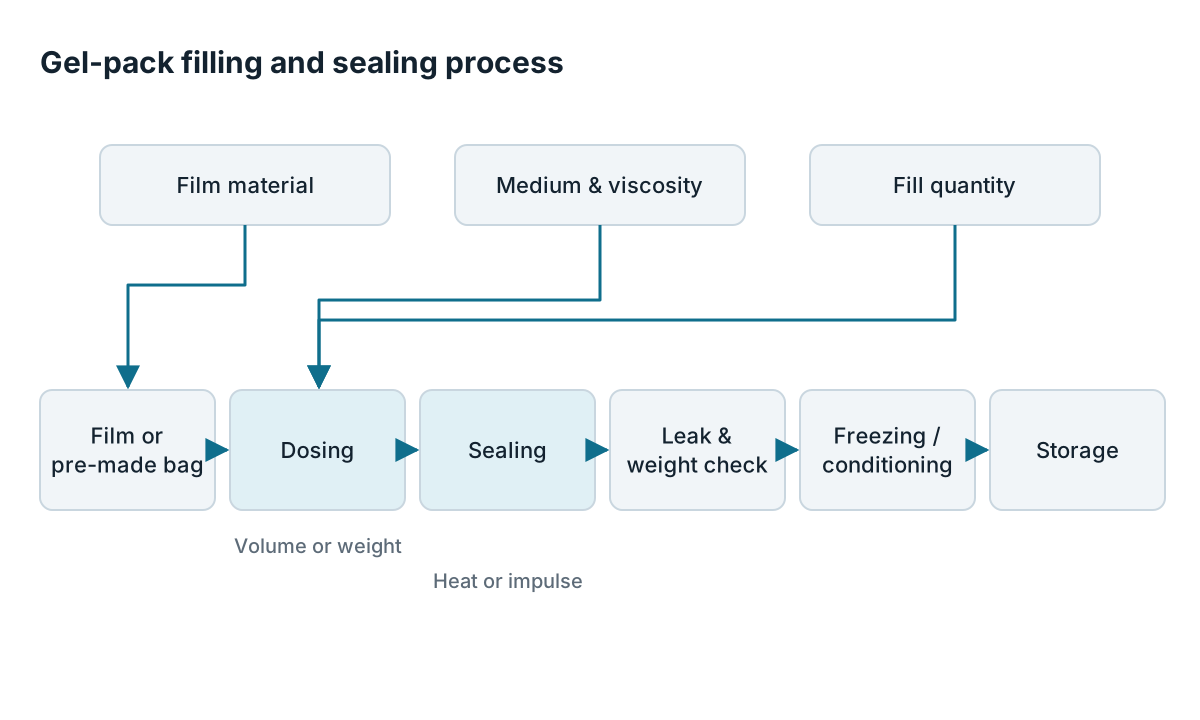
Three decisions interact: how the bag is formed, how the medium is dosed, and how the bag is sealed. The diagram shows the process flow and the three inputs that drive it.
| Decision | Option | Works well when | Watch points |
|---|---|---|---|
| Bag format | Form-fill-seal from roll film | High volume, few sizes, film cost matters | Film tracking and splicing; changeover between widths |
| Bag format | Pre-made bags | Many sizes, lower volume, spouted or specialty bags | Bag loading and opening; more handling steps |
| Dosing | Volumetric (piston, pump) | Stable viscosity, consistent fill temperature | Drift with viscosity or temperature changes; nozzle drip |
| Dosing | Weight-based (load cell) | Tight fill tolerance, variable medium | Vibration sensitivity; slower cycle may be needed |
| Sealing | Heat seal (bar or jaw) | Compatible heat-sealable film | Contamination in the seal area; temperature and dwell settings |
| Sealing | Impulse seal | Thicker or multi-layer film; contamination tolerance | Cooling time; cycle length |
If the medium is thick or stringy, ask how the nozzle cuts off the flow and how the seal area is kept clean. If the line runs several pack sizes, compare the changeover steps for each option, because a fast cycle does not help when each change takes the line down for a long period. If the film is multi-layer, confirm the sealant layer with both the film and the machine supplier, since seal settings depend on it.
Specify inspection and acceptance requirements
State what a good pack is, and how the process proves it, before the machine is bought.
- Fill check. In-line check weight or fill verification, with reject logic and a defined action limit.
- Seal integrity. Visual criteria plus a test method such as pressure, vacuum or squeeze. Say whether it applies to every pack or to samples, and who records it.
- Leak after freezing. Freezing stresses seals, so include a check after the first freeze cycle, at least during commissioning.
- Labeling or marking. If packs carry lot or date marks, define the code, position and legibility.
- Rejects. How rejected packs are separated, recorded and disposed of, and whether the medium is recoverable.
- Records. Which settings and results are stored, and for how long. If your quality system requires a record of machine parameters, ask what the controller captures.
Write acceptance as testable criteria using your own medium and film. The FAT and SAT evidence guide explains how to turn requirements into acceptance tests and what documents to expect. A supplier demonstration with water or a substitute fluid shows that the machine runs. It does not show that it handles your gel.
Check cleaning, maintenance and changeover
Gel residue is sticky and hard to clean once dry, so look at the machine from the cleaning point of view.
- Product-contact parts. Which parts touch the medium, what are they made of, and are they compatible with the medium and cleaning agents?
- Drainability and access. Can hoses, valves and the dosing unit be drained and taken apart without special tools? Hygienic design principles, such as those published by EHEDG, give a vocabulary for avoiding dead legs and hard-to-clean features. They were written for food equipment, so decide with your team how far they apply to your process.
- Cleaning method. Manual, clean-in-place, or part removal. Define frequency, agent and verification.
- Medium changeover. If you switch between media or colors, define what must be removed and how you confirm it.
- Seal components. Wear parts such as seal bars, tapes and blades, with the supplier’s expected replacement interval.
- Spares and service. Local availability, response commitments, and training for operators and maintenance.
- Machine safety. Ask for the supplier’s risk assessment and safeguarding approach. ISO 12100 describes the general method, and local machinery regulations apply to the installed machine.
Prepare a supplier RFQ
An RFQ that gives suppliers enough detail gets specific answers. Include:
- The medium, its data sheet and a sample, if possible.
- Viscosity, filling temperature, particle content and any known issues.
- Film specification and a film sample.
- Pack sizes, fill quantities and tolerances.
- Volume per shift and peak demand.
- Acceptance criteria and test methods.
- Cleaning, changeover and operator expectations.
- Utilities, floor space and layout constraints.
- Documentation required, including manuals, drawings, risk assessment and test records.
- A request for a trial in which the supplier runs your medium and film and reports results.
Ask suppliers to separate what they have run with comparable media from what they believe will work. Both answers are useful if labeled honestly. The equipment RFQ checklist covers the general commercial and technical items that apply to any packaging equipment purchase.
- Medium, viscosity and filling temperature documented.
- Film material, thickness and sealant layer confirmed as compatible.
- Fill quantity, tolerance and headspace defined from the thermal design.
- Pack sizes and changeover frequency listed.
- Sealing method justified for the film and medium.
- Inspection method and reject handling specified.
- Seal check after freezing included in acceptance.
- Cleaning access, method and verification reviewed.
- Safety risk assessment requested from the supplier.
- Trial with your own medium and film requested before commitment.
Scope note: This guide helps you define a process specification. It does not recommend equipment makes or models, and it does not state performance for any machine. Medium suitability, film compatibility and food-contact status must be confirmed with the relevant suppliers and your regulatory staff.
Sources, limitations and commercial relationships
The formal list of sources appears at the end of this page. The standards and regulations named here are for context only; check the current versions and the requirements that apply in your market.
This guide is general. It does not use test data, and it has not been checked against any specific machine, medium or film. Treat supplier statements about speed, accuracy, material compatibility and cleaning as claims to verify. The best evidence is a trial or acceptance test run with your own medium, film and pack sizes, with written results you can keep. A statement that a machine fills “gels” or “liquids” in general is not evidence for your product.
No specific machine is recommended or listed here. If we ever name equipment, it will be only where documentation supports suitability, and any commercial relationship will be stated next to it.
Related guides

Comparing Water-Based Gel Packs and Other PCM Refrigerants
Compare cold chain refrigerants by formulation, phase-change range, conditioning and encapsulation instead of relying on a simple gel versus PCM label.
Read guide
Cold Chain Equipment Procurement: A Practical RFQ Checklist
Turn capacity, environment, interfaces, evidence, service and acceptance needs into a clear RFQ, with a copy-ready field table for packout equipment buyers.
Read guide
FAT and SAT: Evidence to Agree Before Equipment Purchase
A buyer's checklist of FAT and SAT items to agree with the seller before purchase: protocols, test cases, deviations, sign-off and documents for packaging equipment.
Read guide
Designing a Cold Chain Packout Station: Process and Equipment Checklist
A practical checklist for designing a cold chain packout station: workstation layout, refrigerant staging, records, interfaces and what to confirm before buying.
Read guide