
Remote Freezer Monitoring Systems: Architecture, Probes, and Compliance
A technical guide to selecting remote temperature monitoring systems for ultra-low temperature (ULT) freezers and cold storage: probe selection, wireless range, power failure buffering, and 21 CFR Part 11 compliance.
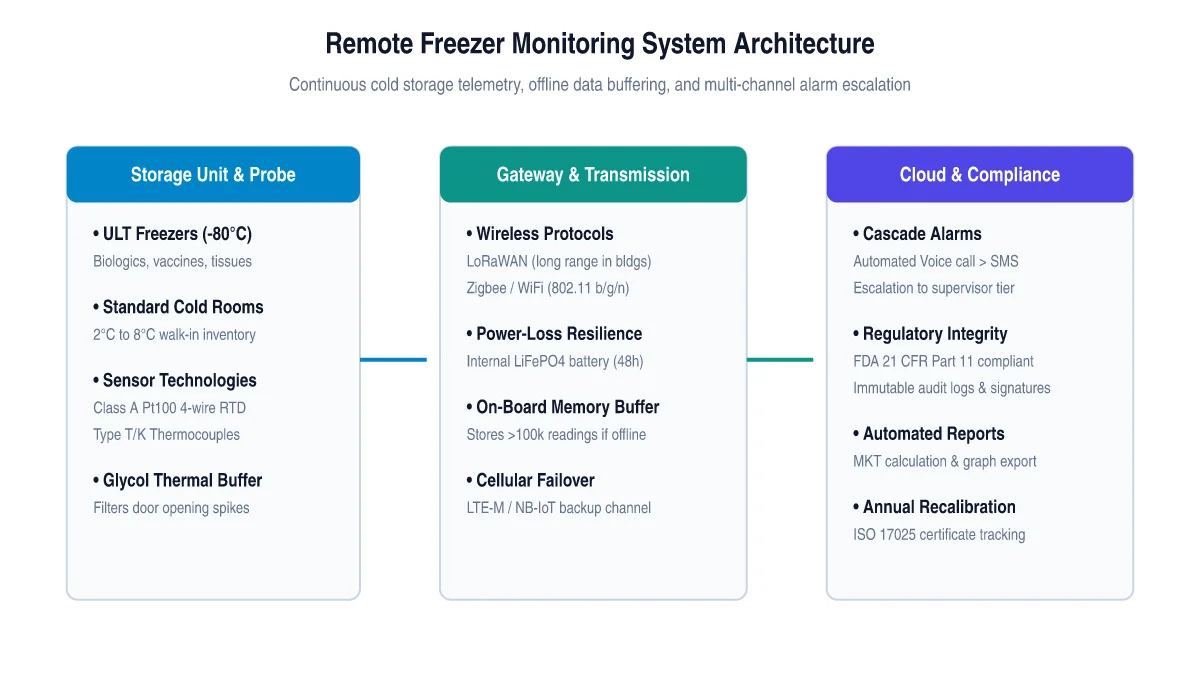
Storage failures in ultra-low temperature (ULT) freezers (-80°C to -86°C) and pharmaceutical cold rooms (2°C to 8°C) can destroy hundreds of thousands of dollars worth of clinical specimens, biologics, or active pharmaceutical ingredients (APIs) in a matter of hours.
While standalone data loggers record temperature history for retrospective review, modern facility management mandates remote freezer monitoring systems capable of detecting compressor failures, open doors, and power outages in real time.
This guide outlines the critical engineering criteria for evaluating wireless and cloud-connected remote freezer monitoring hardware and software.

1. Sensor Probe Technology: RTD vs. Thermocouple vs. Thermistor
The accuracy and reliability of any remote monitoring system depend entirely on the sensor placed inside the refrigerated cavity:
- Class A Platinum RTD (Pt100 / Pt1000): Resistance Temperature Detectors (RTDs) are the gold standard for laboratory and pharmaceutical monitoring. They offer outstanding linearity and long-term stability across -100°C to +200°C with typical tolerances of ±0.15°C at 0°C. For ULT -80°C cabinets, 4-wire RTD configurations prevent lead-wire resistance errors.
- Thermocouples (Type T and Type K): Best suited for extreme cryogenic applications (down to -196°C in liquid nitrogen vapor phase). While rugged and cost-effective, thermocouples exhibit lower baseline accuracy (typically ±0.5°C to ±1.0°C) and require cold-junction compensation circuitry.
- Thermistors: Highly accurate within narrow temperature spans (such as 2°C to 8°C vaccine refrigerators), but lose linearity and fail at temperatures below -40°C.
The Role of Thermal Buffering (Glycol Bottles)
Air temperature inside a freezer fluctuates dramatically whenever a technician opens the door to retrieve a sample. To prevent nuisance false alarms caused by transient warm air drafts, sensor probes must be inserted into a thermal buffer—such as a sealed bottle containing food-grade glycol, glass beads, or nylon blocks. The thermal buffer mimics the thermal mass of actual stored product containers, ensuring alerts trigger only when product core temperatures are at genuine risk.
For calibration requirements, refer to our guide on reading sensor calibration certificates.
2. Wireless Transmission Protocols and Facility Penetration
Transmission of telemetry data from inside insulated metal freezer cabinets to facility local area networks presents unique RF challenges:
| Protocol | Penetration Range | Battery Life | Network Dependency |
|---|---|---|---|
| LoRaWAN (Sub-GHz) | Excellent (through concrete walls & metal racks) | 5 – 10 years | Requires local LoRaWAN gateway |
| Zigbee / BLE (2.4 GHz) | Moderate (often blocked by thick stainless walls) | 2 – 4 years | Requires dense mesh repeater nodes |
| Wi-Fi (802.11 b/g/n) | Fair (high attenuation inside metal enclosures) | 6 – 18 months | Connects to existing IT infrastructure |
| Direct Cellular (LTE-M/NB-IoT) | Good (varies with building interior reception) | 1 – 3 years | Independent of corporate IT / firewalls |
In industrial warehouses and multi-room research complexes, sub-GHz LoRaWAN architecture offers superior penetration through thick walk-in cooler panels and insulated double-walled ULT freezers without requiring complex Wi-Fi certificate re-authentication.
Compare this with in-transit hardware in real-time vs offline data loggers.
3. Power-Loss Resilience and Local Data Buffering
The most critical moment for a monitoring system is during a facility power failure:
- Gateway Battery Backup: Telemetry gateways and wireless transceivers must incorporate internal rechargeable backup batteries (such as LiFePO4 chemistry) capable of sustaining operations for at least 24 to 48 hours during an electrical blackout.
- On-Board Probe Memory Buffering: If both primary power and wireless gateway connectivity fail, sensor probes must store readings locally in internal non-volatile memory (storing at least 10,000 to 50,000 time-stamped points). Once network connectivity is restored, the probes automatically back-fill the cloud repository with zero data gaps.
- Cellular Failover: High-consequence bio-repositories should employ cellular modems as an automated failover channel if facility fiber-optic or Ethernet connections go dark.
4. Multi-Channel Alarm Cascades and Escalation
An alarm that is missed or delayed until morning is worthless. Industrial monitoring platforms provide multi-tiered notification cascades:
- Immediate Voice Calls and SMS: While push notifications and emails can easily be silenced by smartphone sleep modes, critical temperature excursion thresholds must trigger automated phone calls that require interactive dial-pad acknowledgment.
- Escalation Rules: If the primary on-call laboratory technician does not acknowledge an alarm within 10 minutes, the platform automatically escalates to the facilities manager, and subsequently to laboratory leadership.
- Door-Ajar and Compressor Health Alarms: Equipping freezers with auxiliary dry-contact door sensors and current transducers detects mechanical anomalies (such as continuous compressor running or unlatched doors) before temperatures begin climbing.
5. Regulatory Compliance: 21 CFR Part 11 and ISO 17025
For GxP pharmaceutical manufacturing and clinical trial repositories, the software managing freezer data must satisfy strict regulatory standards:
- FDA 21 CFR Part 11 & EU GMP Annex 11: The monitoring database must generate secure, computer-generated, time-stamped audit trails for every alarm acknowledgment, parameter modification, or user login. Records must be tamper-proof and exportable as cryptographically signed PDF reports.
- Traceable Calibration: Every sensor probe must be accompanied by an ISO/IEC 17025 accredited calibration certificate specifying multi-point verification against NIST-traceable reference standards across the freezer’s intended operating range.
- IQ/OQ Validation Protocols: Ensure the system provider supplies Installation Qualification (IQ) and Operational Qualification (OQ) validation documentation packages to streamline internal QA compliance audits.
To contrast facility monitoring with thermal mapping studies, read temperature mapping versus continuous monitoring.
Related guides
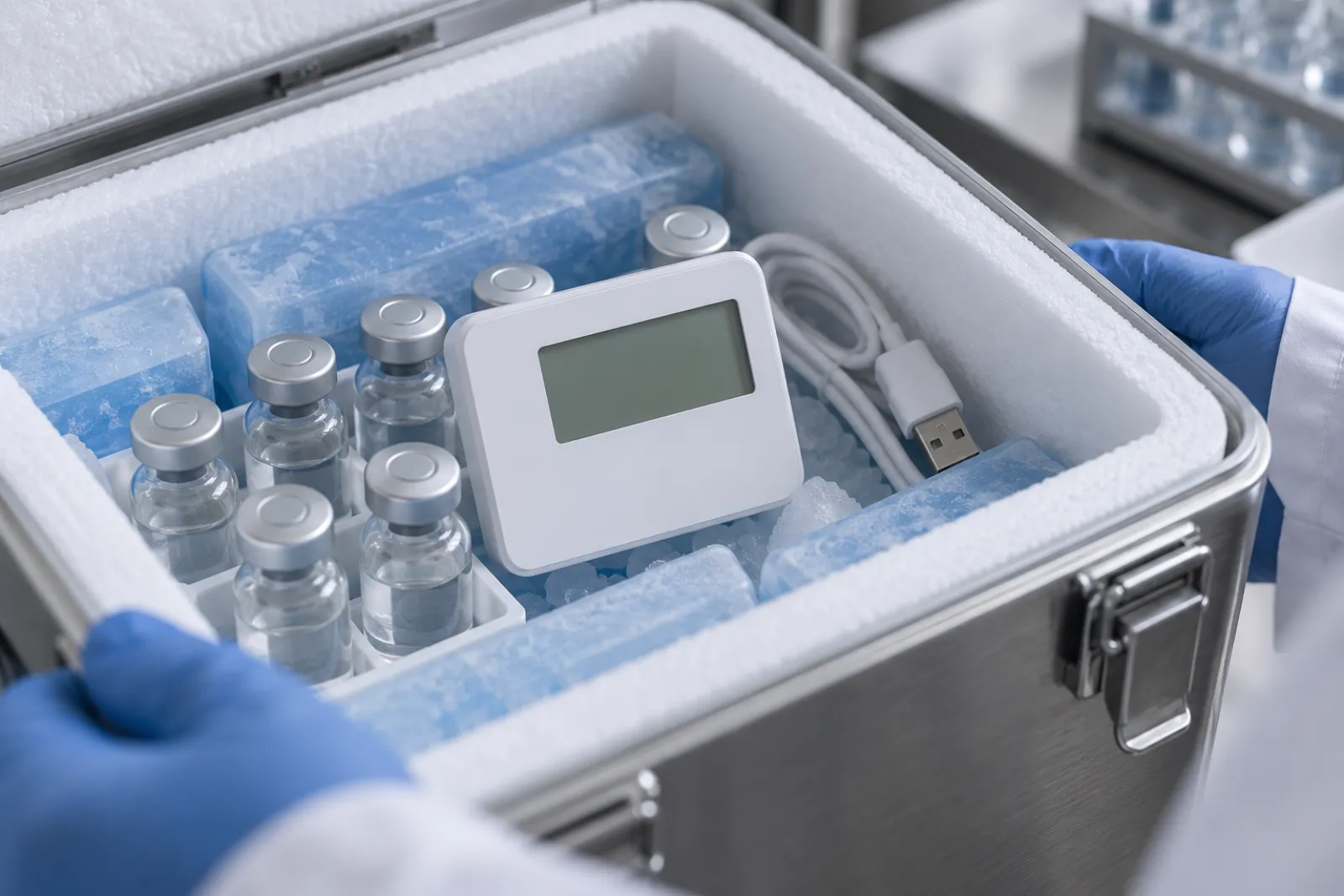
How to Specify a Cold Chain Temperature Data Logger
A specification checklist for a cold chain temperature data logger: range, accuracy, logging interval, export method and calibration documents to request.
Read guide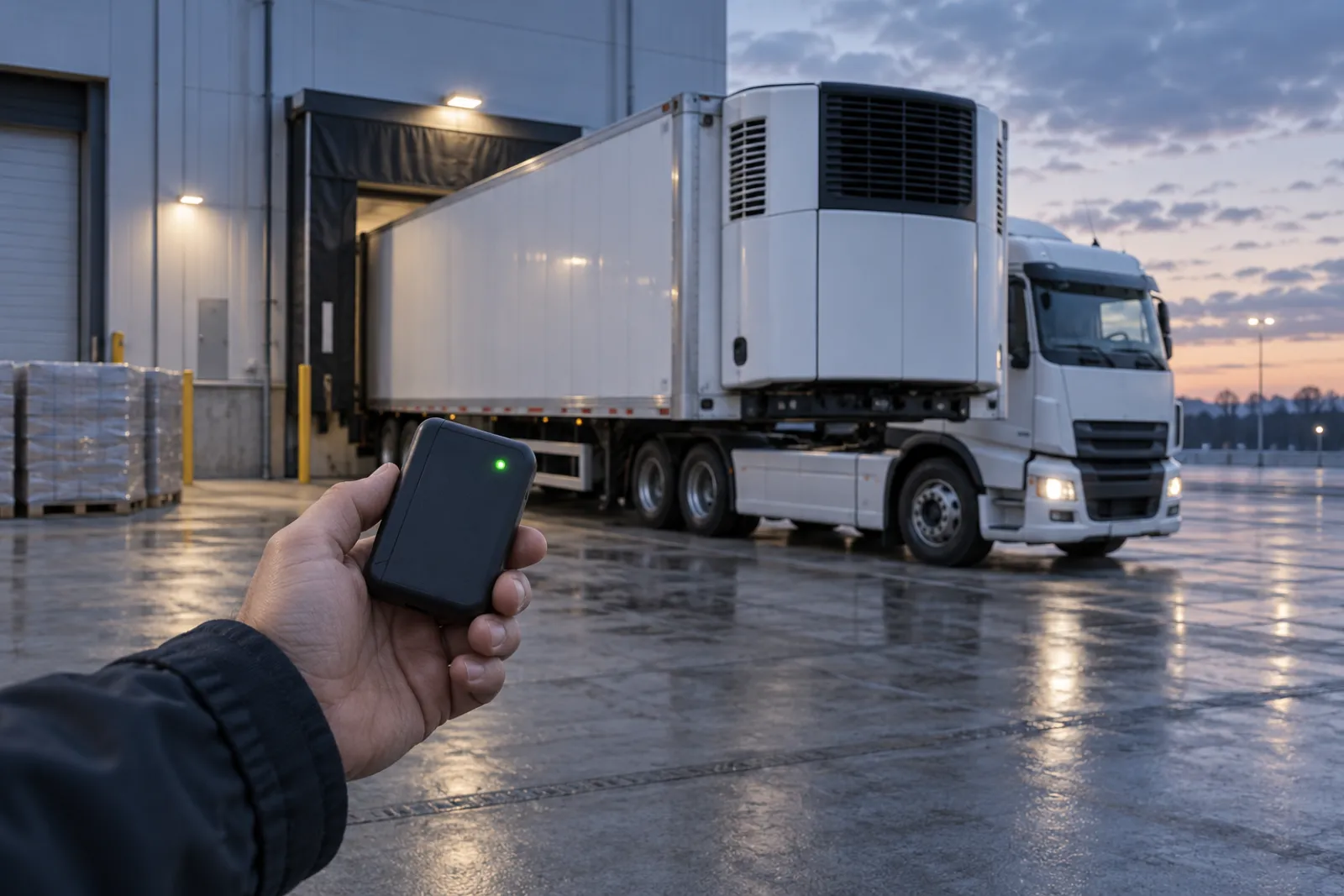
Real-Time Tracking or Downloadable Loggers: Which Workflow Fits?
Compare real-time and downloadable temperature monitoring by when data arrives, alarm response, network dependence and cost structure, lane by lane.
Read guide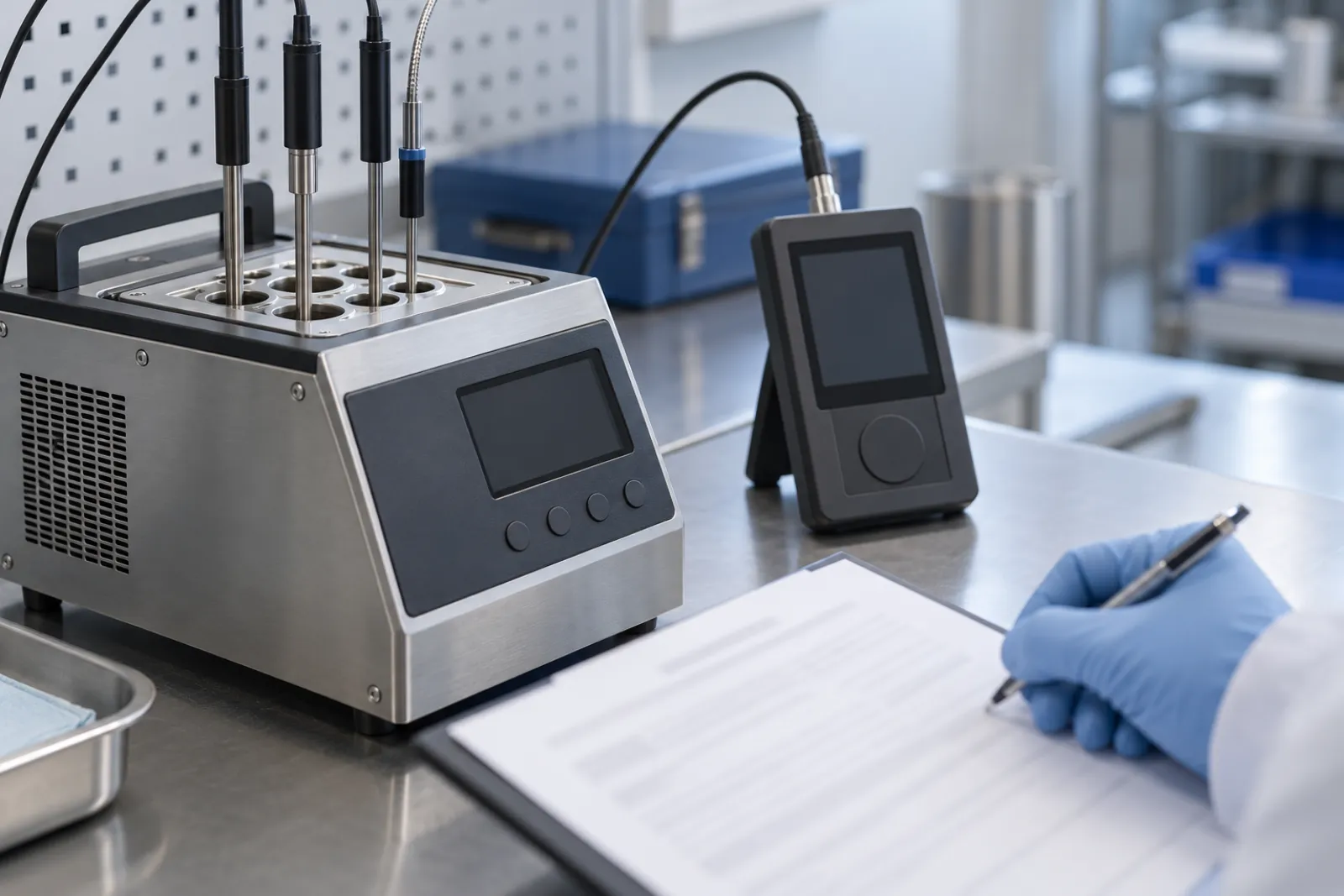
What a Temperature Sensor Calibration Certificate Should Tell You
Check a temperature sensor calibration certificate for device identity, range, dates, reference traceability and results before you accept a logger.
Read guide
Temperature Mapping vs Shipment Monitoring: Different Questions, Different Evidence
Separate facility temperature mapping from shipment monitoring: the questions each answers, the evidence each produces and where buyers mix them up.
Read guide