
Temperature Mapping vs Shipment Monitoring: Different Questions, Different Evidence
Separate facility temperature mapping from shipment monitoring: the questions each answers, the evidence each produces and where buyers mix them up.

The comparison in one sentence
Temperature mapping asks where inside a space the required range is held and where it is not. Shipment monitoring asks whether one specific shipment stayed within limits on its journey. They use similar sensors, so buyers confuse them, but the questions and the evidence differ. This guide separates the two so you can specify the right one. It belongs to the temperature monitoring section of this site.
Shared premises
Both rely on sensors suited to the range, placed deliberately, with calibration evidence and a clear data owner. To specify the sensor itself, see the data logger specification guide. To check the paperwork that comes with it, see the guide on calibration certificates.
Both also produce data rather than decisions. A study report or a shipment file does not say what to do with product; the quality unit and the product documentation do.
What each one is
Temperature mapping is a study of a defined space such as a cold room, freezer, warehouse zone, chamber, or a vehicle cargo area. Many sensors record at once across the space, at different heights and positions, over a defined period and under defined conditions. The result shows temperature distribution, hot and cold spots, and the effect of door openings, loading patterns or equipment cycles. It also gives the basis for choosing where permanent monitoring sensors should go. Guidance for pharmaceutical storage and distribution, such as the WHO model guidance listed under this article’s sources, addresses temperature mapping. Check the current text for what applies to you.
Shipment monitoring places a logger or live device with the goods and records the temperature that goods experience from dispatch to receipt. The output is a record for a specific shipment: the time course, any excursions and the handover points. It describes the logger’s position, not the whole space the shipment passed through.
The two questions
The diagram sets the two questions side by side.
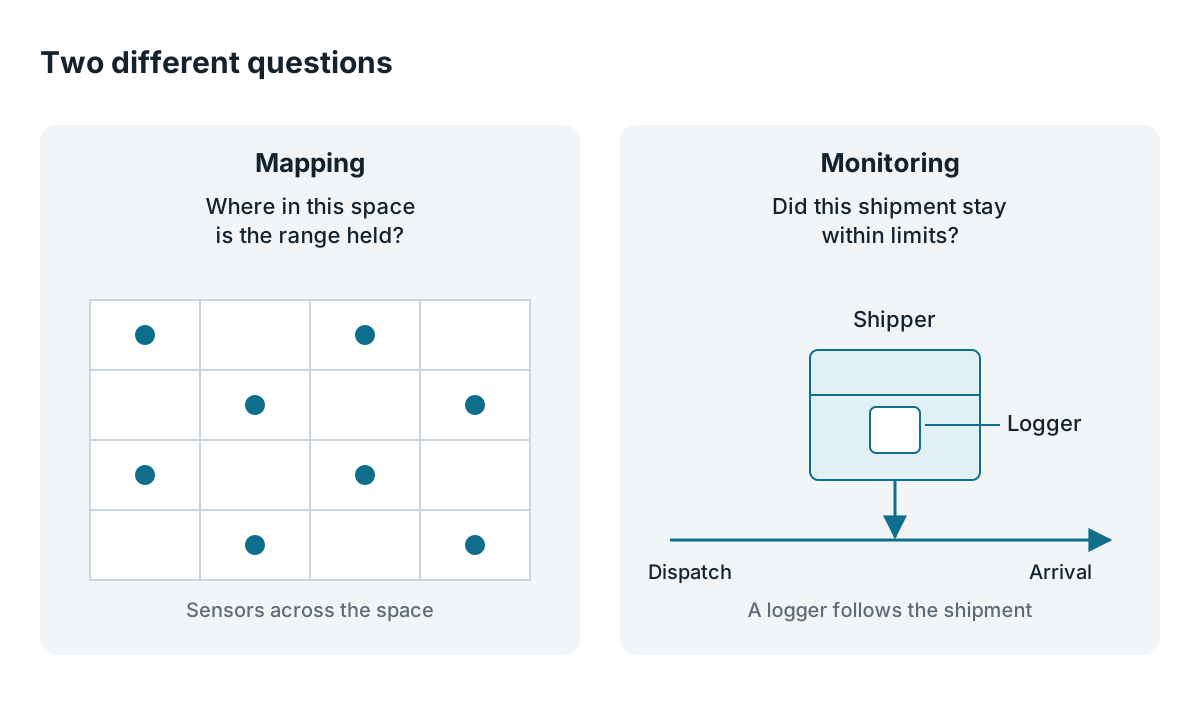
One logger in one box cannot answer a question about a space, and a study of the storage room a shipment left from cannot answer a question about that shipment. Many purchasing errors come from asking one tool to answer the other’s question.
Side-by-side comparison
| Point | Temperature mapping | Shipment monitoring |
|---|---|---|
| Object studied | A space or piece of equipment | A shipment, pack or load |
| Typical question | Where is the range held, and where is it not? | Did this consignment stay within limits? |
| Sensor count | Many, spread through the space | Usually one or a few per shipment |
| Duration | A defined study period, often repeated when conditions change | The journey, plus margin |
| Conditions | Planned and varied: empty, loaded, door openings, outage | The real conditions of the lane |
| Main output | Distribution findings, sensor placement basis, study report | A shipment record and excursion flags |
| Typical owner | Facility, engineering or quality | Dispatch, logistics or quality |
| Repeat trigger | Change to layout, loading, equipment or season, as your procedure defines | Each shipment, or as the shipment plan requires |
Cold room and warehouse mapping: what to define
If you are buying a mapping study, from a service provider or run in-house, write down:
- The space and its boundary: which room, zone, vehicle or chamber, and which operating mode.
- The conditions to cover: empty and loaded, normal operation, door openings, defrost cycles, and any failure or recovery scenario your procedures call for.
- How sensor positions are chosen, including corners, near doors, near air supply and return, high and low positions, and the areas with the most product.
- Sensor number and calibration: a certificate for each sensor covering the study range, with serial numbers that match the data.
- Study duration and seasons. If outdoor conditions change the result, the protocol should say how that was handled.
- Acceptance criteria, which you define before the study.
- Report content: protocol, raw data, deviations, findings and the conclusion on where permanent sensors go.
If you are comparing a service provider’s proposal, the protocol and the report template tell you more than a sales summary. The qualification report review guide lists what to check in the finished report.
Shipment monitoring: what to define
For shipment monitoring, define the position of the logger in the pack, the interval, the start and stop rules, the alarm settings and who reads the data. Mapping a warehouse does not remove those needs, but it shapes the assumptions. If mapping shows that one dock area runs warm, a shipment staged there is exposed to that condition and a shipment logger will record it. That is useful, and it hints that the dock may need a process fix. The dock and handover side is discussed in the guide on warehouse dispatch.
Where the two meet
Mapping and monitoring often feed each other, so keep the link explicit.
- A mapping study informs where permanent monitoring sensors in the room should go. If the warmest position is at a certain rack level, a sensor there tells you more than one at a convenient wall location.
- If shipment records repeatedly show an excursion in the same staging step, a local mapping exercise of that staging area could find out why.
- Staging is a common blind spot. The period between room storage and a shipper in a vehicle is neither the mapped room nor a monitored shipment unless someone puts a logger in the pack at staging and starts it deliberately.
Typical failure modes
- Using a single room sensor as proof that all positions held range.
- Treating a shipment logger report as proof of the condition of the warehouse.
- Mapping an empty room and assuming the loaded room behaves the same.
- Leaving the mapping sensors uncalibrated or with certificates that do not match serials.
- Reusing an old mapping study after a change in layout, equipment or loading pattern.
- Starting the shipment logger too early or too late, so the record misses staging.
Evidence to request
- From a mapping provider: protocol, sensor list with calibration evidence, raw data, deviations, final report.
- From a monitoring supplier: logger specification, calibration certificates, sample data file and a clear description of start and stop.
- From your own process: written positions for sensors, a named owner for review and a rule for what triggers a repeat study.
For facilities and equipment, qualification practice such as EU GMP Annex 15 describes qualification and validation concepts. Check the current text and your own procedures to see whether mapping is part of your qualification approach.
Decision checklist
- State whether the question is about a space or about a shipment.
- For a space, define boundary, operating modes and the conditions to cover.
- For a space, write the sensor placement logic before the study starts.
- For a shipment, write the logger position, interval and start/stop rule.
- Require calibration certificates that match each sensor’s serial number.
- Define acceptance criteria before data is collected.
- Decide what change triggers a repeat of the study.
- Check the staging step between the room and the vehicle for coverage.
- Name the owner who reviews each dataset and the place where it is stored.
Scope note: This guide separates two types of evidence. It does not set temperature limits, sensor counts or study durations, and it does not decide whether a facility or shipment is acceptable. Those come from your quality system, product documentation and current regulatory guidance.
Limitations of this guide
This guide is a general comparison written from published guidance named by title and purpose. Cold Chain Practice has not carried out mapping studies or monitoring trials for this article. The sensor counts, durations and acceptance limits are deliberately not given, since they depend on the space, the product and your procedures. Regulations differ by region and product type, and current versions of standards must be checked at the source. For regulated use, your quality unit decides what mapping and monitoring you need.
Related guides
How to Specify a Cold Chain Temperature Data Logger
A specification checklist for a cold chain temperature data logger: range, accuracy, logging interval, export method and calibration documents to request.
Read guide
What a Temperature Sensor Calibration Certificate Should Tell You
Check a temperature sensor calibration certificate for device identity, range, dates, reference traceability and results before you accept a logger.
Read guide
Temperature-Sensitive Dispatch: A Warehouse Handover Checklist
A cold chain dispatch checklist covering pick checks, logger start, documents, carrier handover, data responsibility and exception escalation fields.
Read guide
Thermal Packaging Qualification Reports: Reading Conditions and Limitations
How to read a thermal packaging qualification report: check the test object, payload, temperature profile, duration, acceptance criteria and stated limits.
Read guide