
Selecting Insulated Shippers: Payload, Transit Time and Handling Constraints
Turn payload, transit time, ambient conditions, dimensions and handling into clear purchasing inputs for insulated shipper selection and supplier quotes.
What this guide helps you do
Most insulated shipper problems start before the purchase order. A buyer sends a supplier a vague request such as “a box that keeps 2 to 8 degrees for three days” and gets a quote for something that may not fit the product, the lane or the people packing it. This guide turns the real constraints into a specification you can hand to any supplier. It covers passive insulated shippers only. If you have not yet decided between passive and powered systems, start with active versus passive packaging. The wider packaging section lists related topics.
Scope note: This guide covers the inputs and questions for selecting passive insulated shippers. It does not recommend brands or models, and it does not give product temperature ranges. Those come from product documentation.
Inputs to define before you ask for a quote
Payload
State the product, its primary packaging, the number of units and the total mass and volume. A full load of liquid behaves differently from a partly filled box of vials with air gaps, because thermal mass differs. If the load varies, state the lightest and heaviest configurations. The lightest case often has the least thermal buffer.
Required temperature range and time limit
Write the range and any excursion allowance exactly as the product documentation states it. Say whether both limits matter. Heat is the usual concern, but many products also need protection from freezing, which changes the refrigerant and packout choices.
Transit duration
Do not use the scheduled delivery time alone. Define the qualified duration you want: scheduled transit plus a margin for delay, customs, weekend holds, missed connections and delivery attempts. Record how you arrived at the margin, since a figure without a rationale is hard to defend or adjust later.
External conditions
List the ambient range at origin, at transfer points and at destination, by season. Include exposure the weather forecast does not show: tarmac, unheated vehicles, loading docks, sun on a doorstep, and heated or cooled sorting hubs. Ask which test profile the supplier’s data uses and compare it with your worst credible case. ISTA thermal procedures are often referenced here; check the current versions.
Size and weight limits
Define the internal cavity you need, the external dimensions the lane can accept and the maximum weight a person or carrier will handle. Courier size bands, pallet footprints and airline limits can force trade-offs that change the insulation type.
Handling and orientation
State whether the box will be kept upright, stacked, dropped, handled by untrained recipients or moved through a mix of manual and automated systems. Some insulation formats tolerate rough handling better than others, and some panels need protection from crushing.
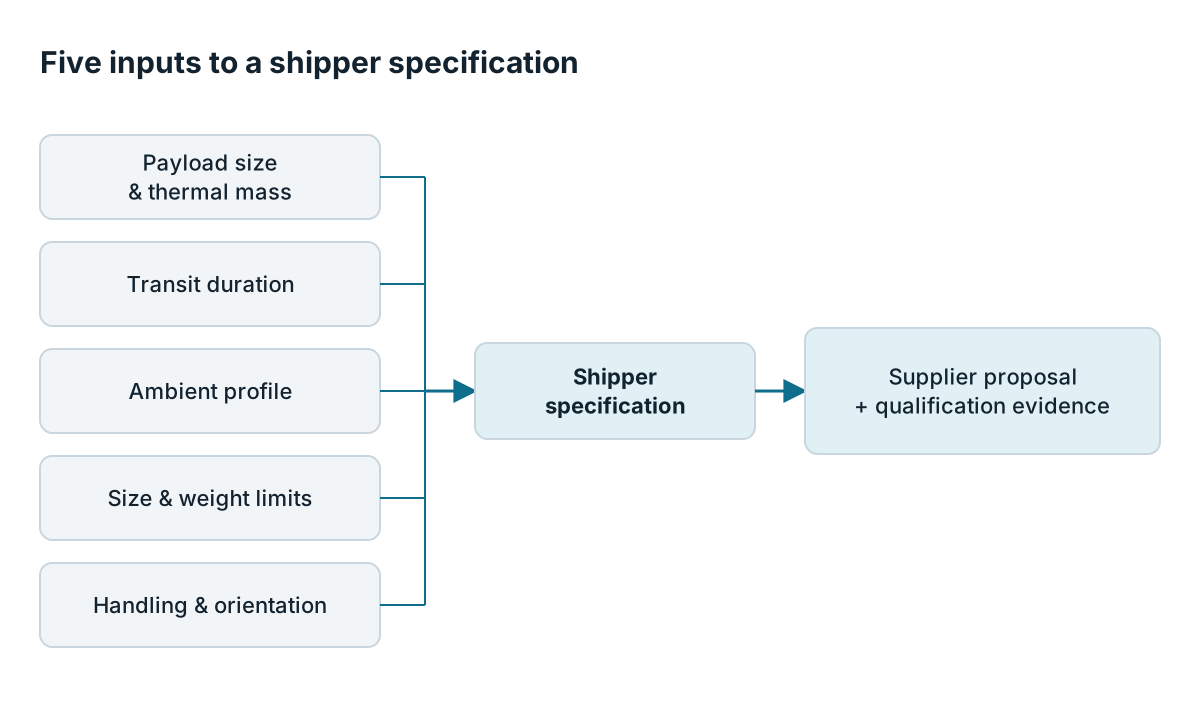
The diagram shows how the five inputs feed one specification.
Construction types and what they mean in practice
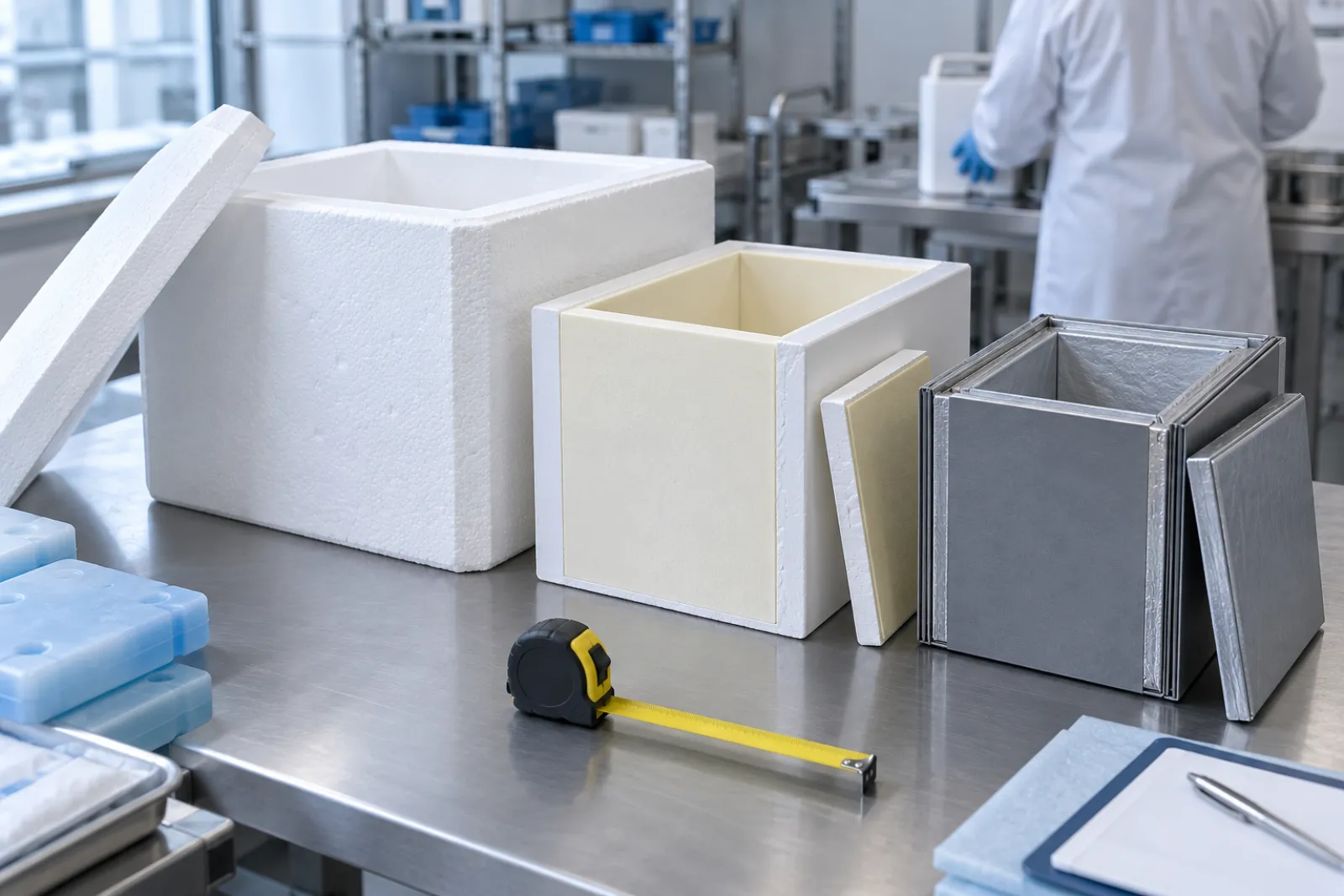
Insulated shippers differ mainly in wall material, thickness and structure. Common families include expanded polystyrene, molded or poured polyurethane, vacuum-insulated panels and various reflective or corrugated-based assemblies. They trade off thermal resistance per unit thickness, durability, weight, cost and end-of-life.
- If external size is tightly limited, then insulation that offers more thermal resistance per unit thickness can preserve payload space, usually with a cost and handling trade-off.
- If shipments are one-way and cost-sensitive, then lighter, simpler insulation may suit, provided the tested duration covers the lane.
- If the box is reused, then wall durability, cleanability and the condition of any panels after repeated use become part of the specification. See reusable thermal shippers.
- If end-of-life or recycling requirements apply, then ask the supplier what material streams the box supports, and in which regions.
A thicker wall is not automatically better, because the shipper, refrigerant and payload work as one system. A thicker box with the wrong refrigerant, or one too large for the load, can perform worse than a well-matched smaller one. Refrigerant choice affects both duration and the risk of freezing; see the guide to comparing gel packs and other PCM refrigerants.
Comparison table: how to compare supplier proposals
| Item | What to ask | Why it matters |
|---|---|---|
| Tested payload | Mass, volume and load pattern used in testing | Your load may have less thermal buffer |
| Tested duration | Time held within range, and the range itself | Must cover your qualified duration |
| Ambient profile | Temperatures and cycle shape used | Must be at least as demanding as your lane |
| Refrigerant spec | Type, quantity, conditioning temperature and time | Packout depends on correct conditioning |
| Pack configuration | Pack diagram, position of refrigerant and product | Packing errors are a common cause of failure |
| Dimensions | Internal, external and loaded weight | Fit with carrier limits and handling |
| Durability | Handling or drop testing, if relevant | Matters for rough or reusable use |
| Documentation | Full report and revision history | Needed for audit and change control |
Packout, handling and interface points
A shipper that works in a test can still fail on the line, so put the following in the specification.
Refrigerant often needs a defined time in a freezer, refrigerator or room environment before use. Count the units you must condition on a peak day, and confirm you have the space and a way to prove the conditioning time.
Define the maximum time between taking refrigerant out of conditioning and closing the box, and write the pack sequence as a diagram or photo guide rather than text alone.
Orientation arrows, handling labels and tamper-evident closure have to fit the box surfaces. If you label or seal automatically, check compatibility with the box dimensions and materials.
Decide where the temperature logger sits in the load and how the recipient retrieves it. The guidance on data logger selection covers logger format, sample interval and placement.
Give the receiver simple instructions for opening the box, retrieving the logger and handling a box that arrives damaged or late.
Evidence to ask the supplier for
- The complete thermal test report, including the pages behind any summary.
- The standard or internal procedure used, its current version and any deviations.
- Test conditions: payload simulation, refrigerant conditioning, ambient profile, number of runs and the logger positions.
- Any change history for the box, including material or supplier changes.
- Known limits: seasons, payloads or durations the supplier does not support.
- Guidance on requalification triggers, such as a change in payload or lane.
When the report arrives, use the process in reviewing qualification reports to check whether it supports your use. A strong report for a different lane does not qualify yours.
Total cost and procurement notes
Unit price is only part of the cost. Include conditioning energy and space, labor at packout, freight on weight and volume, losses from failed shipments, return handling for reusable units and disposal. The guide to packout cost sets out a way to structure this, using assumptions you label clearly. Ask for pricing at your realistic volumes and seasonal peaks, not a single quantity.
Plan for supply continuity too. Ask whether a second source of the same configuration exists, what lead times apply at peak season and how changes to materials are notified.
Purchasing checklist
- Product range, excursion allowance and time limit confirmed from product documentation
- Payload range defined, including lightest and heaviest cases
- Qualified duration set with the delay margin and its rationale recorded
- Seasonal ambient profiles listed for origin, transit and destination
- Carrier size and weight limits confirmed
- Handling environment described, including stacking and orientation
- Refrigerant type, quantity and conditioning requirements defined
- Packout time and pack diagram agreed
- Logger placement and retrieval process defined
- Full test report requested and reviewed against your lane
- Requalification triggers and change notification agreed
Limitations of this guide
This guide helps you define a specification. It cannot tell you what duration or temperature a particular box can hold, because that depends on the product, payload, refrigerant and test conditions documented by the supplier and confirmed by your own qualification. Standards and regulations such as ISTA procedures and Good Distribution Practice guidelines are named for context only. Check their current versions and your regulatory obligations. Cold Chain Practice has not tested any shipper and offers no brand or model recommendations. Any numbers you choose for margins or durations are your own decisions and should be justified in your quality records.
Related guides
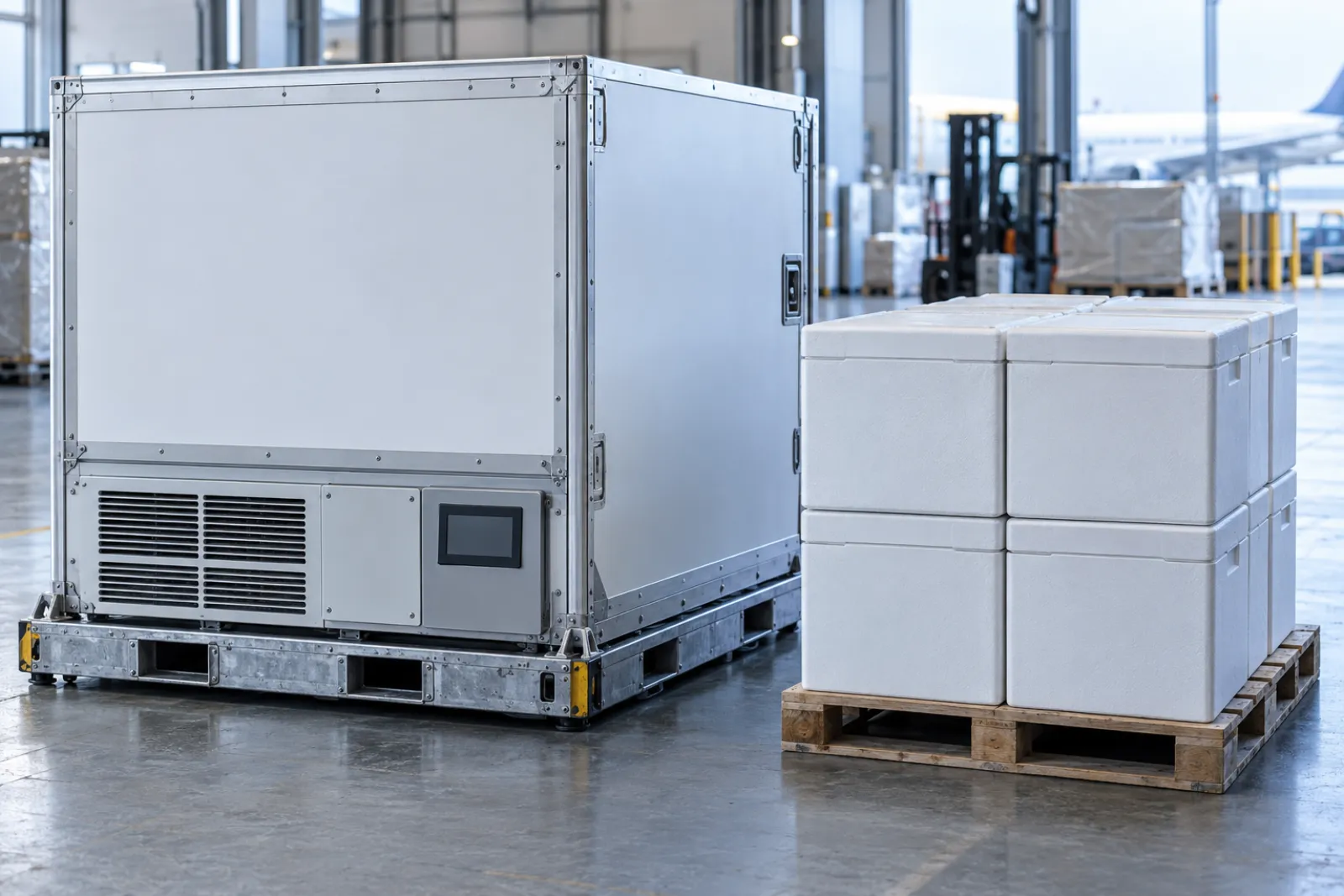
Active vs Passive Cold Chain Packaging: A Buyer's Comparison
Compare active and passive cold chain packaging by system boundary, route constraints and operating conditions, without a universal winner.
Read guide
Comparing Water-Based Gel Packs and Other PCM Refrigerants
Compare cold chain refrigerants by formulation, phase-change range, conditioning and encapsulation instead of relying on a simple gel versus PCM label.
Read guide
How to Specify a Cold Chain Temperature Data Logger
A specification checklist for a cold chain temperature data logger: range, accuracy, logging interval, export method and calibration documents to request.
Read guide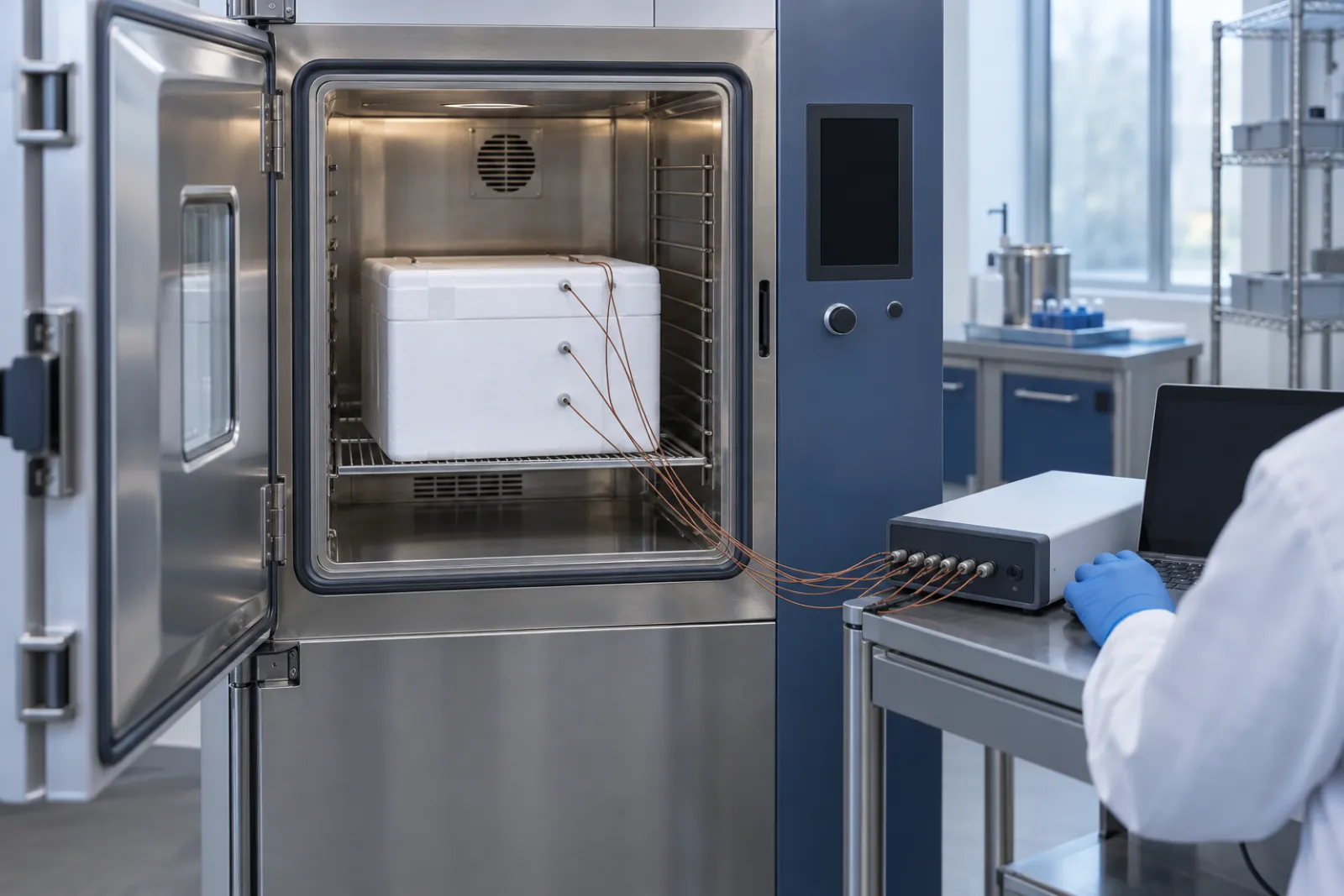
Thermal Packaging Qualification Reports: Reading Conditions and Limitations
How to read a thermal packaging qualification report: check the test object, payload, temperature profile, duration, acceptance criteria and stated limits.
Read guide