
Reusable Thermal Shippers: Return Logistics, Cleaning and Rotation
Compare return flows, cleaning responsibility, rotation, losses and total cost when you run reusable thermal shippers, with a checklist for operations teams.
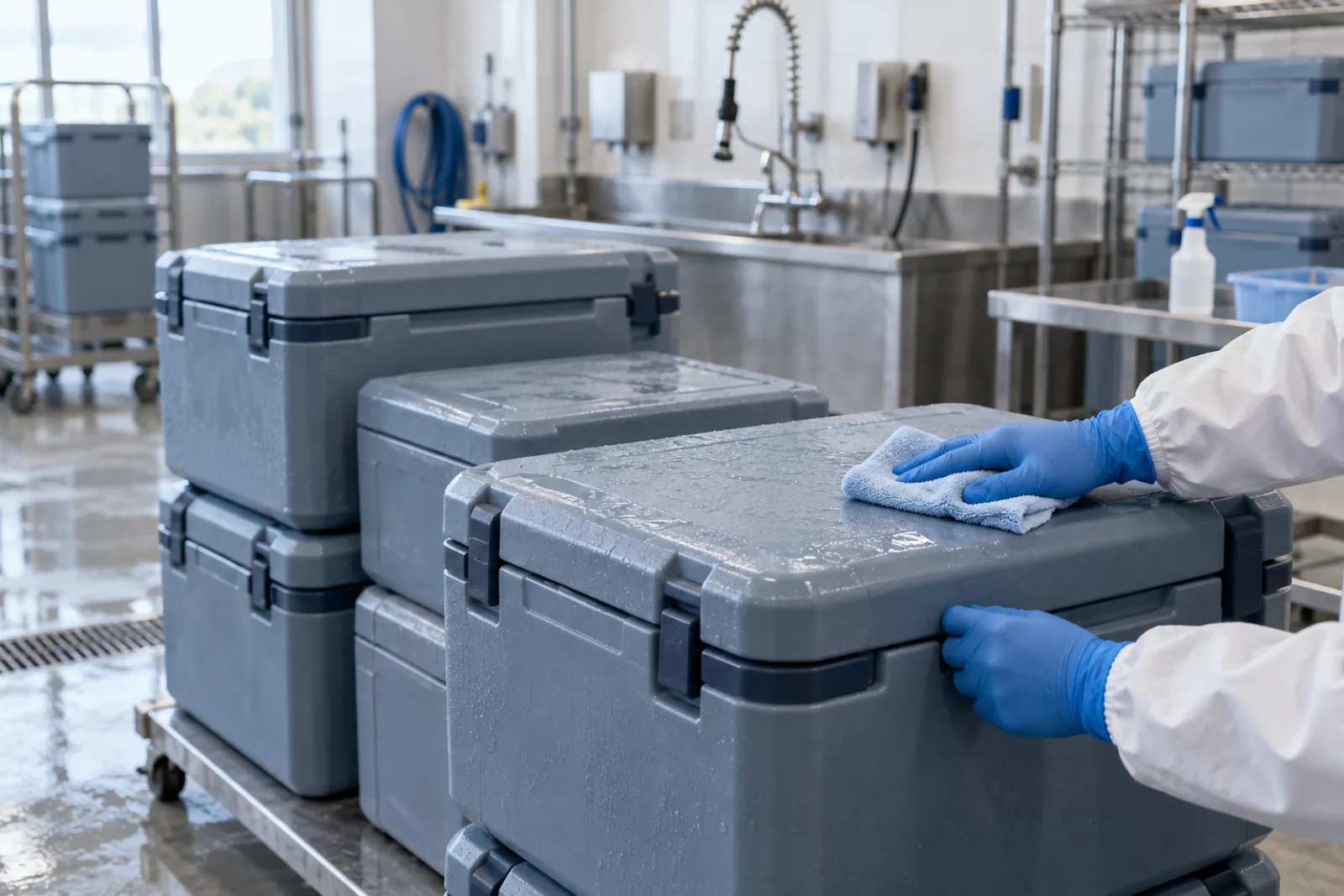
Scope: a reusable shipper is a process as well as a product
With a single-use box you buy a unit of protection. With a reusable thermal shipper you buy a loop: dispatch, delivery, return, inspection, cleaning, repair, conditioning and storage. The box can be excellent and the program can still fail if units do not come back, come back damaged or leave the cleaning area without a record. This guide focuses on that loop. It applies to passive reusable shippers and, with additions, to powered reusable units. For the choice between those categories, read active versus passive packaging. Other topics are in the packaging section.
Scope note: This guide covers operational design for reusable shippers. It does not give cleaning validation criteria, cycle counts or cost figures. Those depend on the product, supplier data, your quality system and local rules.
The loop and where it leaks
The diagram shows the eight stages and the three places where units are usually lost from the loop.
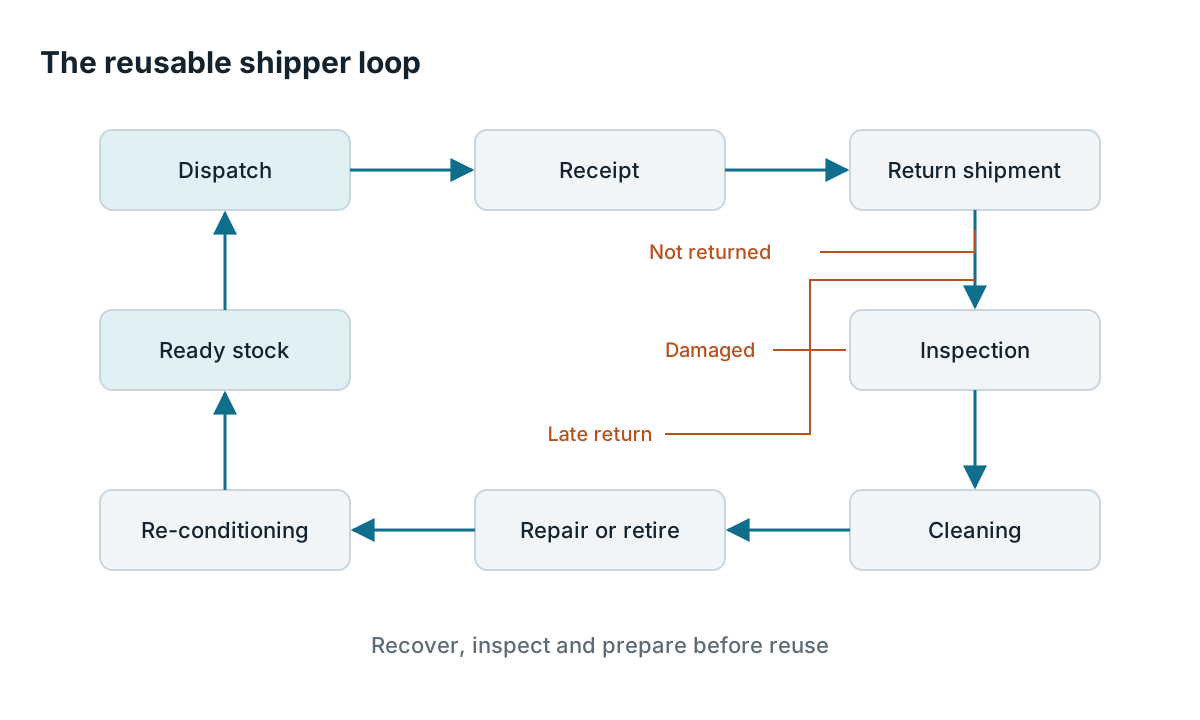
Each step has an owner, an interface and a failure mode. Most programs plan dispatch carefully and the rest barely at all, so map who is responsible at each step before the first unit ships.
Common premises to settle first
- Lane type: closed loop (known recipients, regular volume) or open loop (many recipients, irregular shipments). Closed loops return more units with less effort.
- Ownership. Whether you own the units, lease them or use a pooling service decides who pays for loss, who cleans and who holds records.
- Product risk. The more sensitive the product, the more cleaning, inspection records and traceability matter.
- Trips per unit before retirement. Estimate it from supplier durability data and keep it flexible, because real handling can shorten life.
- Site capacity at peak for returns, cleaning, storage and conditioning.
Return flows compared
Return design is the largest operational choice, and the right option depends on your lanes.
- If recipients are few and known, scheduled pick-ups or a returns slot on regular deliveries can work, and unit visibility is high.
- If recipients are many and irregular, you may need prepaid return labels or collection points, with reminders and a clear deadline. Expect more late and lost units and plan stock accordingly.
- If the lane is international, customs treatment of returned packaging, transit time and the cost of return freight can outweigh the saving over single-use. Check each lane.
- If units are bulky, collapsible or nesting designs may reduce return freight volume, at some cost in durability and handling.
- If you use a pooling or service provider, clarify who tracks units, what counts as a loss and how fees are triggered.
Whichever return flow you pick, track units. Decide whether you use serial numbers, barcodes or tags, and who scans at each step. Identification standards such as GS1 keys are one option, and your supplier may have a tracking method of its own.
Comparison table: operating models
| Question | In-house loop | Outsourced or pooled service | Hybrid |
|---|---|---|---|
| Return handling | Own staff and logistics | Provider collects and processes | Provider handles return, you handle cleaning or the reverse |
| Cleaning responsibility | Your site and procedure | Provider’s site and procedure | Split, and the split must be documented |
| Rotation control | Your stock records | Provider’s records, shared with you | Needs a shared record and an agreed owner |
| Loss risk | Borne by you | Often shared by contract | Defined by contract |
| Visibility | Depends on your tracking | Depends on provider reporting | Depends on both |
| Capital and space | Highest on your side | Lower on your side | Moderate |
| Audit trail | Under your control | Needs supplier audit and records access | Needs both |
Choose from your volumes, recipients and quality requirements.
Cleaning, inspection and release
Cleaning responsibility often sits in a gap between operations and quality. Settle these points in writing.
Who cleans. Name the party and the site. State the cleaning method, agents and drying requirements the supplier allows, and avoid agents or temperatures that could damage insulation or seals. Ask the supplier for approved methods.
What counts as clean. Define the visual and, where needed, microbiological or residue criteria. For food, sanitary transport rules such as those in US sanitary transportation regulations may apply to equipment used for food, so check the current rules for your market. For medicines, follow your quality system and Good Distribution Practice requirements as they apply to you.
Inspection before release. Check for cracks, deformed lids, damaged gaskets, delaminated panels, residue, odor, missing parts and, where applicable, battery or sensor condition. Define pass, repair and retire criteria, and photograph examples so staff apply them consistently.
Release records. Record unit ID, cleaning date, inspector and result. Records should show that a unit has been released before it is conditioned and dispatched again.
Powered units. For units with a controller, add functional checks, battery condition and calibration or verification of sensors, in line with supplier requirements and your qualification. PDA Technical Report No. 64 is a reference point for qualification of active systems.
Rotation, conditioning and ready stock
Rotation covers which units are used next, how long they sit and how many trips they have made. Define:
- first-in, first-out or another rule for ready stock;
- a trip counter or age limit per unit, if the supplier specifies one;
- conditioning of refrigerant and any pre-conditioning of the shipper, with time limits between conditioning and use;
- a buffer of units for seasonal peaks and for units in transit or in cleaning;
- storage conditions for ready units, so that they are not contaminated or damaged.
A common mistake is sizing the fleet by shipments per week alone. The fleet must also cover time in return transit, in the cleaning queue and in repair or quarantine. A short cleaning backlog can cause a stock-out even when the box count looks adequate.
Losses and total cost
Build the cost view from the whole loop, starting well before the unit price. Count the capital or lease of units and refrigerant, return freight, cleaning labor and materials, inspection, repairs, storage and conditioning space, tracking costs, and unit loss. Compare it with single-use packaging on the same lanes. Use the structure in the guide to packout cost, and label any figures as assumptions.
Illustrative example: a team might list each of the eight loop stages in a worksheet row and ask each owner for a time and cost per unit, then add a loss rate assumption. The example shows a method only and carries no figures. Rates must come from your own operation or a supplier quote.
Treat break-even claims with caution. Whether reuse pays off depends on how many trips each unit makes, which depends on return rates and damage, and you learn those only after running the loop for a while. Consider a pilot with a limited recipient group before scaling.
Connecting to dispatch and the warehouse
Reusable units add physical flow to the warehouse: a returns bay, a cleaning area, a ready-stock zone and conditioning space. Align these with dispatch so staff do not pack from the wrong stock. The guide to warehouse dispatch for temperature-sensitive goods discusses handover points that apply here. Packout steps still follow the specification set out in insulated shipper selection, and a reusable shipper still needs a defined payload, duration and ambient profile.
Questions for suppliers and service providers
- How many use cycles does the supplier support, and on what evidence?
- What cleaning and inspection methods does the supplier approve?
- Which parts are replaceable, and what is the lead time for them?
- How does the supplier or provider handle unit tracking, loss and damage?
- Is the thermal test report based on new units only, or also on units after repeated use?
- What documentation will be available for audit?
Operations checklist
- Lane type (closed or open loop) and recipients identified
- Ownership model and loss responsibility agreed in writing
- Return method, deadline and reminders defined for each lane
- Unit identification and scan points chosen
- Cleaning method, party and site named, with supplier approval
- Inspection criteria and retire rules documented with examples
- Release record designed and linked to unit ID
- Rotation rule and trip or age limit set where required
- Fleet sized for transit, cleaning, repair and peak season
- Cost model built across all loop stages with assumptions labeled
- Pilot scope and review date agreed
Limitations of this guide
This guide describes an operating framework. It gives no cleaning validation criteria, supplier cycle limits or cost data, and it does not claim that reusable shippers are cheaper or more sustainable than single-use packaging. That depends on your lanes and on measured return and loss rates. Regulations and standards are named for context only. Check current versions and the requirements that apply to your product and market. Cold Chain Practice has not tested or audited any reusable shipper or service.
Related guides
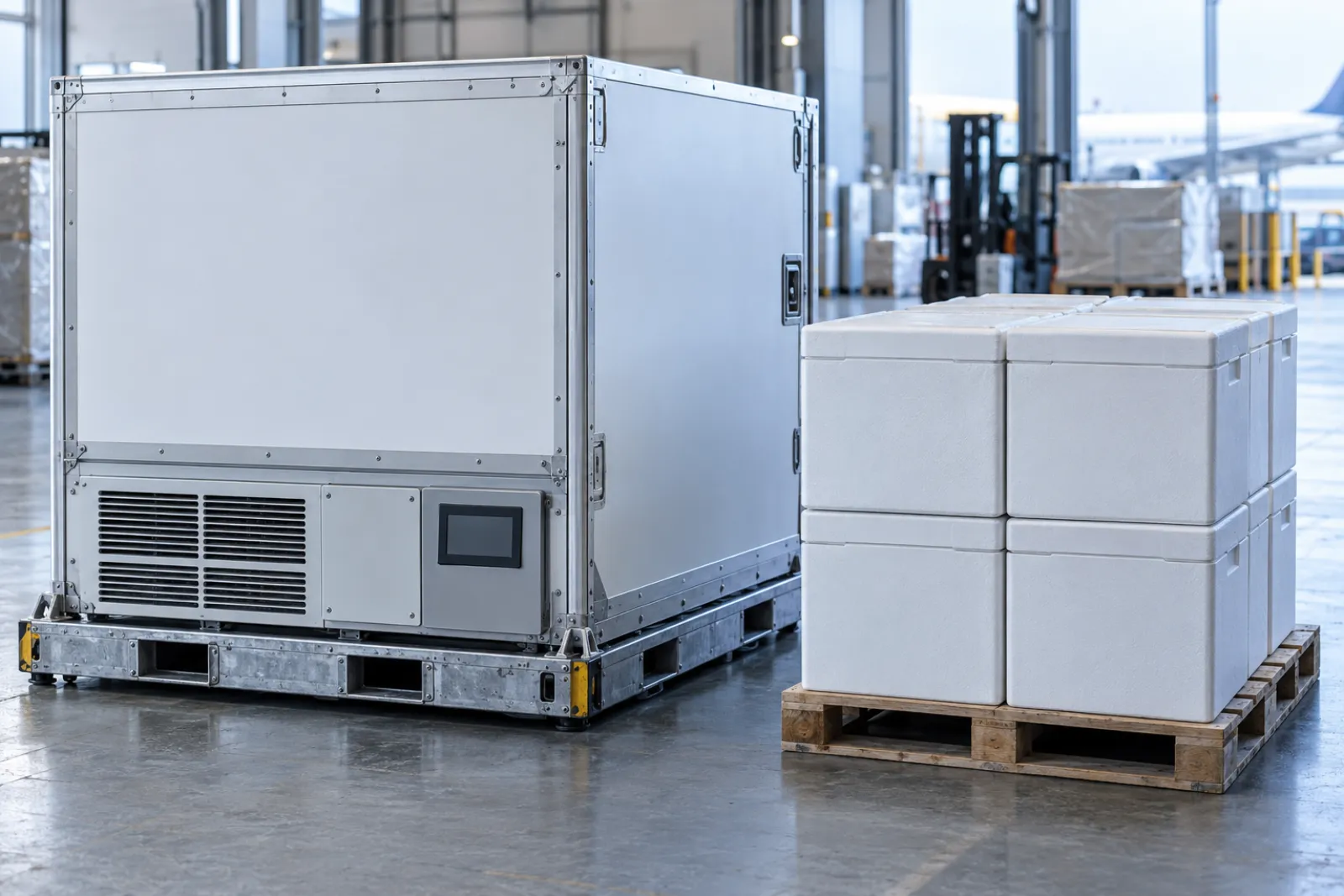
Active vs Passive Cold Chain Packaging: A Buyer's Comparison
Compare active and passive cold chain packaging by system boundary, route constraints and operating conditions, without a universal winner.
Read guide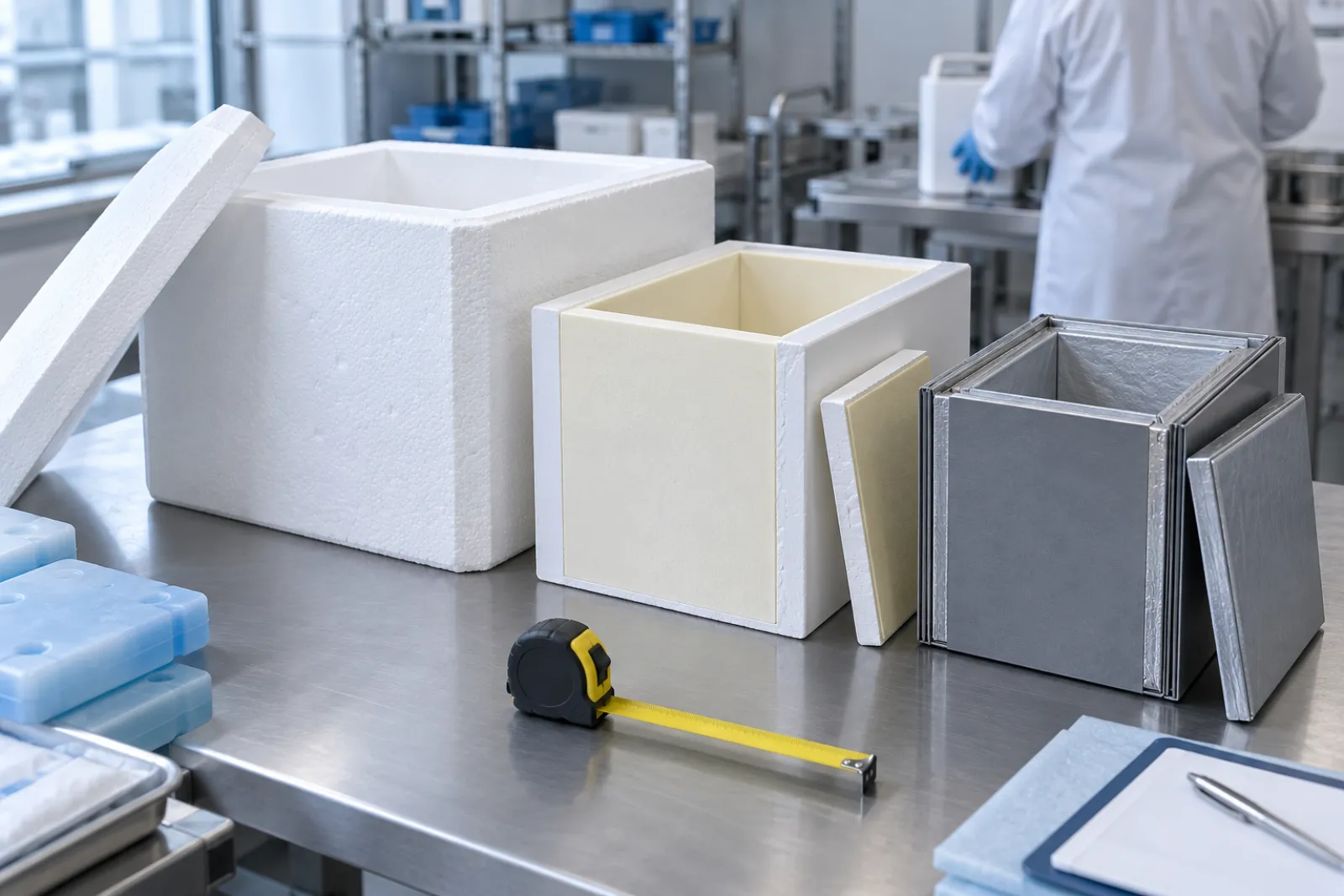
Selecting Insulated Shippers: Payload, Transit Time and Handling Constraints
Turn payload, transit time, ambient conditions, dimensions and handling into clear purchasing inputs for insulated shipper selection and supplier quotes.
Read guide
Temperature-Sensitive Dispatch: A Warehouse Handover Checklist
A cold chain dispatch checklist covering pick checks, logger start, documents, carrier handover, data responsibility and exception escalation fields.
Read guide
Cold Chain Packout Cost: A Transparent Comparison Worksheet
A transparent cost worksheet for cold chain packout: materials, labor, monitoring, return logistics and losses, with formulas and blank cells you fill in.
Read guide